
India’s economy is still one of the fastest-growing in the world
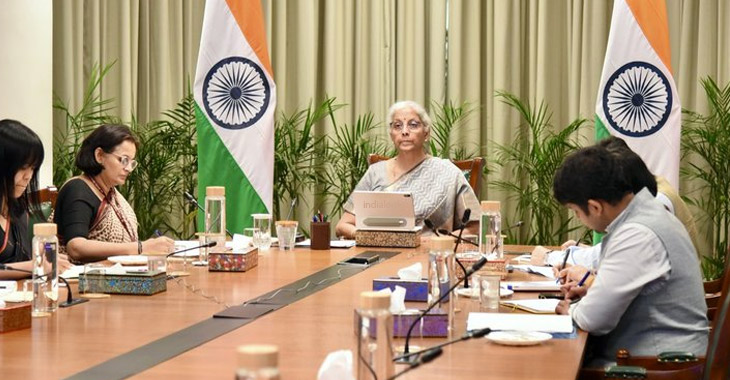
Nirmala Sitharaman, the Finance Minister, said on Thursday that India is still one of the world’s major economies with the fastest growth and that GDP growth is expected to remain strong in the medium term at about 7%.
Speaking of India’s devotion to the ideal of “Reform, Perform, and Transform,” the Finance Minister emphasized India’s outstanding economic development in recent years under Prime Minister Narendra Modi‘s visionary leadership, stating that our growth is mostly driven by domestic demand and has a largely market-determined exchange rate.
From New Delhi, she took part in the “Global Convergence for Growth Summit” virtual meeting, stating that in today’s linked globe, prosperity and difficulties are shared, but the results of disputes and uncertainty disproportionately affect developing nations and the Global South.
“Coordinated global action is required in this scenario. We must bolster multilateral cooperation in order to create robust economies, quicken sustainable development, and promote inclusive growth that benefits everyone, she stated.
The Summit was organized to unite the leaders of developed and developing economies and talk about how to foster fair growth that is based on a successful global framework.
Emmanuel Macron, the president of France, presided over the Summit, which was attended by the leaders of all G7 countries, as well as India, Brazil, China, Kenya, South Korea, and the IMF.
“Not all imbalances are created equal,” the Finance Minister stated on the subject of global imbalances; “some represent differences in demographics, stages of development, resource endowments, or economic structures. ” “Consequently, we should continue to prioritize excessive and protracted imbalances while acknowledging that the extent of internal requirements varies greatly from nation to nation. “
Speaking on behalf of the Global South, she continued by stating that “The burden of adjustment should not fall disproportionately on countries that are not the drivers of these imbalances. Like many emerging nations, India is still mostly on the outside of the generation and spread of worldwide imbalances, but we continue to endure their spillover effects. ”
She underscored the importance of ensuring that multilateral institutions continue to meet the demands of emerging countries and reinforcing faith in them.
She noted that enhancing Multilateral Development Banks’ financing capacity, operational flexibility, and responsiveness will be essential and called for Multilateral Development Banks that are better, larger, more effective, and more representative and that can provide considerably more funding to emerging economies and developing countries.
The Finance Minister said that recent events have shown how crucial resilient, diversified, and geographically dispersed supply chains are, especially for vital minerals, and that concentrating on circularity, recycling, and urban mining might help solve some of the collective sourcing issues the globe is facing.