
Govt releases a casebook about gender empowerment and AI
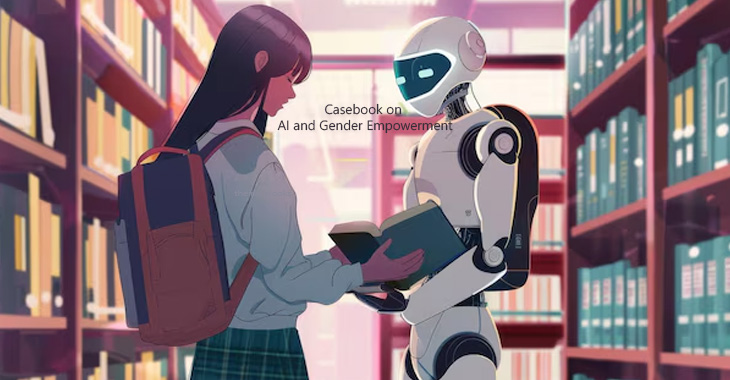
The government of India has released a Casebook on AI and Gender Empowerment, marking a major turning point in the country’s dedication to ethical and inclusive AI development, the IT Ministry announced on Friday.
The casebook was created by the government through the IndiaAI Mission under MeitY, in collaboration with UN Women, and with assistance from the Ministry of Women and Child Development (MoWCD). It was formally unveiled at the “India AI Impact Summit 2026.”
It combines 23 practical AI solutions from the Global South that show quantifiable effects on women’s empowerment and gender equality.
The ministry claims that the casebook has 23 AI solutions that were chosen after a rigorous multi-stage examination process from 233 applications from more than 50 nations.
According to the announcement, “an impartial review committee comprising senior officials from MeitY, MoWCD, and UN Women assessed proposals based on real-world deployment, verifiable gender impact, and evidence-based outcomes.”
The highlighted solutions cover a wide range of important areas, such as access to justice and legal services, education and skill development, digital safety and the prevention of gender-based violence facilitated by technology, healthcare, including menstrual health, economic empowerment and financial inclusion, climate resilience and sustainable agriculture, and knowledge resources for policymakers and practitioners.
When UN Secretary-General Antonio Guterres stopped by the UN Women booth at the JanAI Expo, the casebook gained international recognition.
Under the WeSTEM project, which was carried out by UN Women in partnership with the governments of Madhya Pradesh, Gujarat, and Maharashtra, as well as the European Union, Micron, Nokia, and the Head Held High Foundation, the Secretary-General spoke with young women from rural communities who were interested in pursuing STEM jobs.
The statement claims that the young women discussed how they are use AI to broaden learning possibilities, develop new talents, and investigate new career paths, all of which are realistic steps toward becoming future leaders in technology.
It added that the casebook highlights workable solutions to guarantee AI systems are moral, inclusive, and sensitive to the various realities of women and girls in India and throughout the Global South. It is a comprehensive knowledge resource for policymakers, technology developers, researchers, and practitioners.