
Tim Cook Steps Down as Apple CEO; John Ternus Takes Over
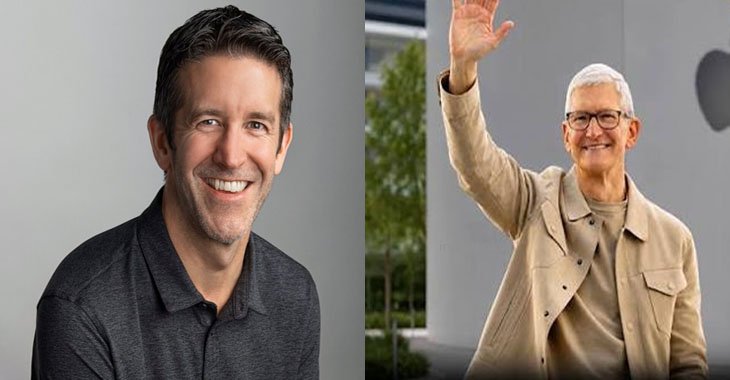
Tim Cook is stepping down as Apple’s chief executive officer after nearly 15 years at the helm of one of the world’s most valuable technology companies, marking the end of a major era for the iPhone maker.
Cook’s final day as Apple CEO is August 31, 2026. Starting September 1, longtime Apple hardware executive John Ternus will take over as chief executive. Cook, however, is not leaving Apple completely.
He will become executive chairman of the company’s board and continue to play a strategic role. Apple announced the leadership transition in April after its board unanimously approved the succession plan.
Cook became Apple CEO in August 2011, succeeding co-founder Steve Jobs. His leadership style differed significantly from Jobs’ product-driven approach. Cook focused heavily on operational efficiency, supply-chain management, global expansion and building Apple’s services business.
During his tenure, Apple expanded its product ecosystem with successful launches and growth in categories such as the Apple Watch and AirPods. The company also made a major shift toward designing its own processors, with Apple silicon becoming an important part of its Mac strategy.
Apple’s financial growth under Cook has been extraordinary. The company’s market value increased dramatically during his leadership, reaching around $4 trillion and approaching the $5 trillion level. Apple also sold more than three billion iPhones during Cook’s tenure, while its services business became an increasingly important source of revenue and profit.
Tim Cook steps down as Apple CEO after 15 years, handing over to John Ternus, marking the end of a transformative era. Under Cook, Apple’s market value surged over 2,000%, reaching $4 trillion, and the company returned more than $1 trillion to shareholders. Apple grew its workforce to 166,000 people across 535 stores in 27 countries. The company shipped 3.1 billion iPhones and now boasts over 2.5 billion active devices globally. Cook expanded Apple’s product offerings with successes like the Apple Watch and AirPods while also spearheading in-house chip development, boosting profit margins from 40% to close to 50%.
Despite these gains, challenges loom, notably Apple’s dependence on Chinese manufacturing and growing regulatory scrutiny; the EU has imposed $19 billion in penalties, and global regulators continue probing antitrust issues. The services segment grew significantly to 1.5 billion paying subscribers, though recent missteps in AI have raised concerns.
Apple has begun outsourcing AI technology to partners like OpenAI and Google. Cook, with a total compensation of $880 million and an estimated net worth of $3 billion, will remain as executive chair. His successor inherits both an immensely successful company and pressing strategic challenges. Tim Cook served as Apple’s CEO from August 2011 to August 2026, following Steve Jobs’ departure.
Over his 15-year tenure, Cook transformed Apple from a $108 billion company into a $416 billion one. Under his leadership, Apple sold over three billion iPhones, which continue to comprise half of the company’s revenue. Manufacturing expanded significantly, with India now producing 25% of all iPhones, though China continues to handle most of the manufacturing despite declining sales. Apple’s service offerings, virtually non-existent in 2011, emerged as the company’s most profitable segment.
New product categories like the Apple Watch and AirPods surpassed Mac sales, while the company’s $3,499 headset failed to gain traction. Transitioning to in-house chip development revitalized the Mac business to $33.7 billion annually. However, Apple faced regulatory challenges, including $19 billion in fines from Europe. Cook also grappled with unmet company promises over a two-year span. He exits the company with $880 million in earnings and a 0.02% stake in Apple, handing the reins to John Ternus.
Despite those achievements, Cook leaves Apple at a challenging time. Artificial intelligence has become the central battleground for major technology companies, and Apple has faced criticism over the pace of its AI development. The company is working to improve Apple Intelligence and Siri while competing with rapidly advancing AI products from rivals.
John Ternus will now be responsible for guiding Apple through this next phase. Ternus joined Apple in 2001 and currently serves as senior vice president of Hardware Engineering. He has been involved in the development of several important Apple products and has spent most of his career within the company. His extensive hardware and engineering experience makes him a natural successor as Apple looks toward its next generation of products. Apple announced Tim Cook will become executive chairman of Apple’s board of directors and John Ternus will become Apple’s next CEO.
Ternus will also face immediate expectations from investors and consumers. Apple is preparing for its next major product event on September 9, just days after the leadership transition. The company is expected to introduce a new iPhone lineup, while reports and speculation have focused on new hardware and Apple’s broader strategy for the coming year.
Cook’s move to executive chairman means the transition is not a complete break from his leadership. He is expected to remain involved in selected strategic matters, while Ternus assumes responsibility for Apple’s day-to-day operations. Apple announced Tim Cook will become executive chairman of Apple’s board of directors and John Ternus will become Apple’s next CEO.
The change marks a significant turning point for Apple. Cook leaves behind a company that is substantially larger and more diversified than the one he inherited in 2011. Ternus now has the difficult task of protecting that success while convincing customers and investors that Apple can remain at the forefront of technology in the age of artificial intelligence.