
RBI Eases KYC Copy Certification Rules for Foreign Investors
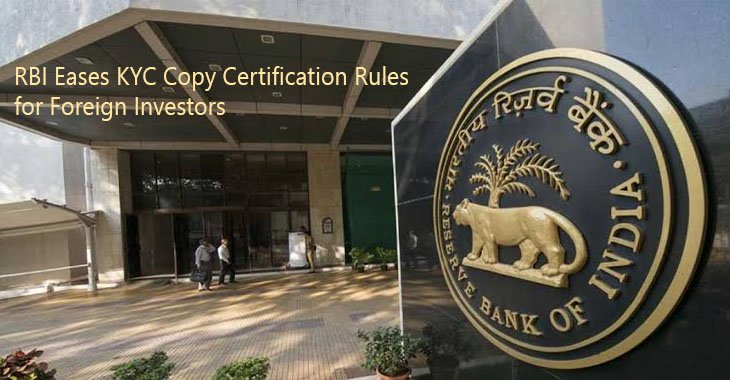
The Reserve Bank of India (RBI) has eased compliance procedures for foreign portfolio investors (FPIs), allowing Indian banks to accept original certified copies of specified KYC documents when authorised officials overseas certify them.
The RBI introduced the change through the RBI (Commercial Banks–Know Your Customer) Amendment Directions, 2026, which took effect immediately. The amendment extends to FPIs a facility that the central bank had previously provided to non-resident Indians and persons of Indian origin.
Banks can accept original certified copies of KYC documents when recognised authorities under the RBI framework certify them. These authorities include authorised officials at overseas branches of Scheduled Commercial Banks registered in India, overseas bank branches that maintain relationships with Indian banks, Notaries Public, Court Magistrates, Judges, and Indian Embassies or Consulates General in the country where the non-resident customer resides.
The change means overseas-based FPIs no longer need to arrange certification through a process in India. Instead, they can use any recognised overseas certification channel before submitting the original certified copy to the Indian bank.
The RBI amendment, however, continues to require banks to conduct KYC checks on FPIs.
The amendment also retains the RBI’s existing definition of a certified copy. When the bank cannot conduct offline verification, it must compare the copy of the customer’s Aadhaar proof of possession or another officially valid document with the original document.
An authorised bank officer must record the comparison on the copy in line with the applicable requirements.
Meanwhile, FPI outflows reached Rs 23,676 crore during the month through Friday, with investors selling shares through the exchanges. The outflows indicate that foreign investment flows turned negative again after FPIs recorded positive flows in July and August.
Market conditions, including the ongoing Iran-US conflict and its impact on crude oil prices, could influence FPI flows. Higher crude prices and elevated US bond yields, with the 10-year US Treasury yield at 5 per cent, can weigh on Indian equities and foreign investment flows. At the same time, the resilience of the Indian economy and expectations of stronger corporate earnings growth could support investor sentiment.