
PM Modi highlights agrivoltaics to boost rural incomes ahead of global summit
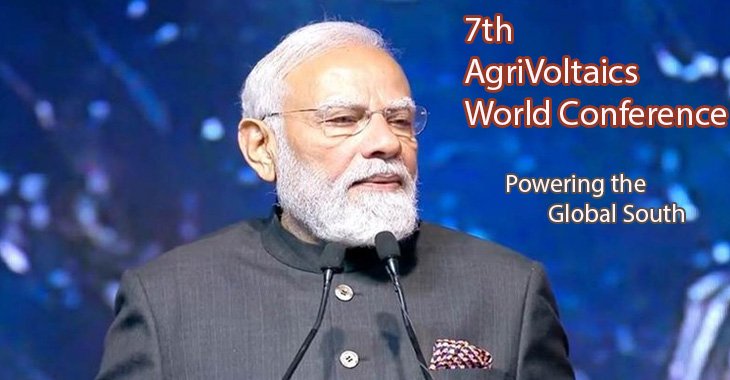
Prime Minister Narendra Modi on Wednesday highlighted the potential of agrivoltaics to boost farmers’ incomes by combining solar power generation with agricultural activities. He shared an article by Union Ministers Pralhad Joshi and Shivraj Singh Chouhan outlining how the approach could support rural prosperity.
In a post on X, Modi said agrivoltaics could create an additional revenue stream for farmers, reduce energy costs and support crop productivity. He also described the technology as an important opportunity to strengthen rural incomes.
India will host the seventh AgriVoltaics World Conference from October 21 to 23 under the theme “Powering the Global South”.
In their article, Joshi and Chouhan explained that agrivoltaics, also known as AgriPV, allows farmers to generate clean electricity while continuing to cultivate crops on the same land. They said the model could diversify farm incomes and help agricultural communities manage uncertainties.
The government plans to introduce further measures under the next phase of the PM-KUSUM scheme to accelerate solar power generation through a dedicated focus on agrivoltaics. These efforts will build on the progress India has already made in solarising agricultural irrigation, according to the government.
The ministers noted that small and marginal farmers account for nearly 86 per cent of India’s farming community. They said agrivoltaics could help these farmers benefit from both agricultural production and the transition to clean energy.
The model can generate additional revenue through electricity sales while reducing farmers’ dependence on diesel and purchased electricity. Solar installations can also create favourable microclimatic conditions that help protect crops from heat stress, drought, excessive solar radiation and hail, the ministers said.
They added that wider adoption could generate rural employment opportunities in solar installation, maintenance and agricultural services associated with the infrastructure.
However, the ministers stressed that farmers must adopt suitable crop varieties and maintain effective irrigation and nutrient management practices to achieve the best results. Developers must also design solar installations that allow sufficient sunlight to reach crops and sustain agricultural productivity.
The ministers emphasised that successful implementation would require close coordination among agriculture and energy departments, state governments, research institutions and local bodies.
Such collaboration, they said, would help India expand agrivoltaics and strengthen the links between farming, renewable energy and rural development.