
Natural gas and nuclear power are essential to US-Indian relations
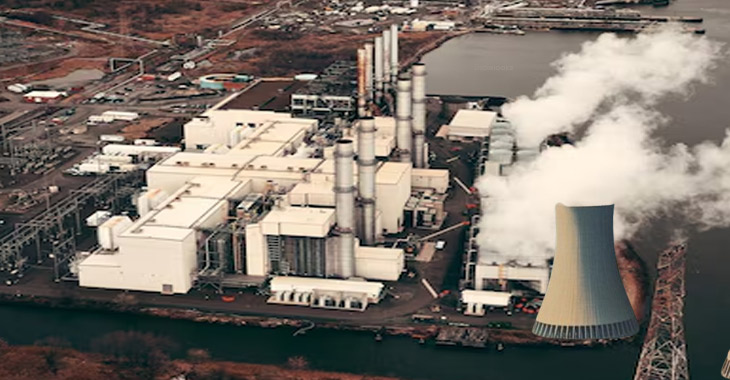
According to a US-based expert, nuclear power and natural gas may serve as the foundation for the next stage of India-US energy collaboration as both nations seek to reduce costs, diversify supply chains, and improve long-term energy security.
Dinsha Mistree of the renowned Stanford University’s Hoover Institution stated, “There are plenty of opportunities right now,” emphasizing that nuclear energy is “very critical” for future cooperation between the United States and India.
He pointed out that, despite the groundbreaking 2008 civil nuclear treaty establishing the groundwork for collaboration, it was “never fully realized because of various liability laws that were passed in India shortly after. ” “There’s now a lot of opportunity for US and India to work very closely together on nuclear,” he said, citing recent legislative developments.
According to Mistree, the US calculus has changed. The fact that the US also has to develop its own energy initiative is another key factor, he said, noting that nuclear energy has widespread bipartisan backing in Washington. India could play a key role, he said, since cost was the greatest obstacle. “India manufactures nuclear component parts… The expenses may be significantly lower than what we could produce in the US or even what we could purchase in other nations.
He also warned that momentum is still fragile. “It’s still very early days… Indian companies have not yet “make the case fully enough that the US will be a promising market for them to supply to,” he said, adding, “I see a lot of industry players waiting and watching to see what will emerge. ”
Mistree stated that bilateral trade in natural gas is expected to increase in the future. “I believe it’s going to be more than that. The US is “one of the world’s biggest producers,” he said, adding that he would hope it would be “even more. ”
He cited structural bottlenecks in India, such as “taxation and distribution,” but said that these may be overcome by changing regulations. According to him, modifications to the tax system, such as possible GST changes, might “make gas more affordable,” making India “a much more attractive market” for American providers.
He emphasized that diversification is now crucial. “Clearly, India should diversify its supply chain if it is depending on just one or two countries… and including the US is not just a nice to have… it’s a necessity,” he said.
Additionally, Mistree emphasized the environmental benefits of gas. “Gas is one of the reasons we have clean air in the United States,” he stated, alluding to the transition from coal. He also said that renewable energy is complemented by gas. “Gas is a switch. ” You can turn it on, you can turn it off… In fact, the renewable energy infrastructure that India has been constructing complements it quite well.
He said that India is at a turning point right now, considering recent geopolitical turmoil. “This is India’s first major real energy crisis,” he stated, calling for a more organized policy response. “Think more seriously about energy security, develop an energy security strategy, diversify alliances, and seek for new resources. ”
He said that the US experience might be helpful. “For decades, American politicians have considered energy security… We have more energy than ever before, and there is a “natural fit” for collaboration between the two nations, he observed.
Beyond energy, Mistree stated that US academic and political organizations are starting to give more attention to India’s rise, but that there are still gaps in understanding. India, he said, “hasn’t gotten the same level of attention” as China, which he described as “a real tragedy” at Stanford. But he said that “farsighted leaders… are very bullish towards India” and want India-US relations to be “at the center” of America’s long-term strategy.
Mistree stated that the Indian American community is “very positive,” adding that Indians are “the richest national origin group in the United States. ” This, he said, was due to integration and common principles. “It’s one of us, not one of them,” he stated.
However, he cautioned that success entails new difficulties. “With success… comes some level of jealousy,” he said, noting that how Indian Americans are seen may have an impact on how India itself is seen in certain areas of the United States.
He highlighted growing worries across the political spectrum. “This is becoming an increasingly and worryingly bipartisan issue,” he said, citing examples of policy resistance and negative sentiment.
The significance of Indian talent to the American innovation environment was emphasized by Mistree. “When you consider our America’s STEM and innovation pipeline, we want the best brains to continue to come here,” he said, cautioning that any feeling of exclusion might have lasting effects.
Additionally, he emphasized a rising reverse connection. “There are approximately a million Americans living in India, many of whom are the children of people who hold H-1B visas,” he stated, noting that this demographic has the potential to influence the relationship between the two nations in the future.
He stated that Indian Americans are growing more outspoken when it comes to politics. “Indians are more assertive…” Connecting this to increasing representation in elections and US public life, he said, “Indians are not going to be wallflowers in a debate. ”
As the third-largest energy consumer in the world, India has been diversifying its energy sources in an effort to strike a balance between economic development and environmental sustainability.
The United States has established itself as a significant exporter of liquefied natural gas and continues to invest in nuclear technology of the future.