
India should strive for 100% ethanol for automobile fuel
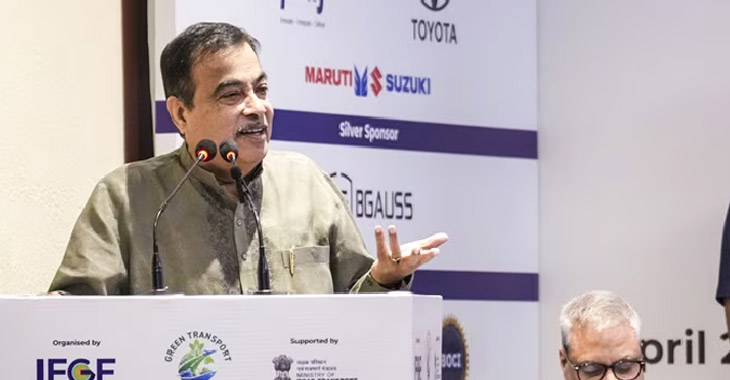
In order to reduce reliance on imported oil, which made the nation vulnerable to disruptions in its energy supplies in the face of geopolitical unpredictability like the Iran war, Union Road Transport and Highways Minister Nitin Gadkari stated on Tuesday that India should strive to achieve 100 percent ethanol blending for usage as an automobile fuel in the near future.
India depends on imports to cover 87% of its oil needs, the minister said.
Gadkari said in his remarks at the Indian Federation of Green Energy’s Green Transportation Conclave that we import fossil fuels worth Rs 22 lakh crore, which is also a source of pollution, we must focus on boosting the production of biofuels and alternative fuels.
India should strive for 100% ethanol blending in the near future. We must become independent in the energy sector since the conflict in West Asia has brought us to an energy crisis today, he stated.
In 2023, Prime Minister Narendra Modi unveiled gasoline that contained 20% ethanol. With only a few modifications to the engine to prevent corrosion and other problems, Indian cars are now able to operate on E20 gasoline. Brazil and other nations have 100 percent ethanol blending.
However, Gadkari emphasized the necessity of discouraging the use of petrol and diesel vehicles, saying, “But we cannot force people to stop buying petrol and diesel vehicles. ”
Gadkari stated that the petroleum industry is lobbying against this action in response to increasing social media worries about E20.
He urged automakers to prioritize quality over price, arguing that it would help them break into new markets.
Gadkari also emphasized that green hydrogen is the fuel of the future, but that in order for a hydrogen fuel station to be economically viable, the cost of operating it must be reduced.
The transfer of hydrogen fuel is an issue. The minister emphasized that, in order for India to become an energy exporter, we must also be able to manufacture 1 kg of hydrogen at $1.
He claimed that waste must be used to generate hydrogen.
Additionally, he emphasized that India might generate more jobs by concentrating on the circular economy.
In addition, the minister said that the Corporate Average Fuel Efficiency III regulations, which will take effect on April 1 of the following year, will have little effect on flex-fuel and electric vehicles.