
India Needs a Strong Critical Materials Ecosystem for Chip Manufacturing
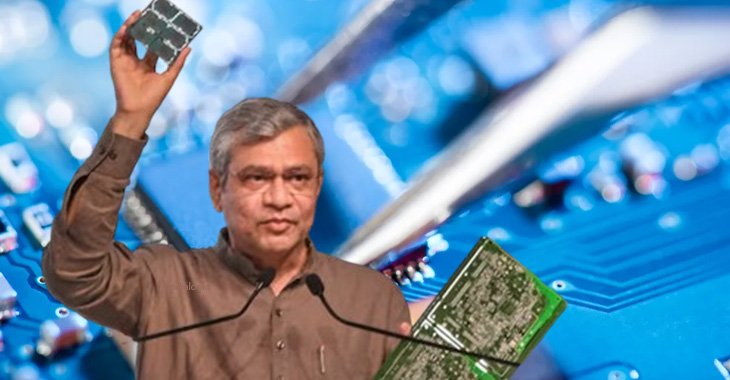
India’s dependence on critical materials remains a major vulnerability in its pursuit of technological sovereignty, Union Electronics and IT Minister Ashwini Vaishnaw said on Wednesday.
Vaishnaw stressed the need to rapidly develop domestic capabilities in materials essential for semiconductors and other advanced technologies.
He said the concentration of global critical material supply chains in a handful of countries poses a significant challenge to India’s ambitions of becoming a trusted technology and manufacturing hub.
He identified chemicals, gases, substrates and other semiconductor inputs as key areas where India must strengthen domestic expertise and expand production.
Countries that dominate material ecosystems today have spent decades developing their capabilities. However, Vaishnaw said India cannot afford to follow the same timeline and must accelerate efforts to build expertise in manufacturing, processing, storage and handling of critical materials.
Vaishnaw also said India’s semiconductor mission is expanding beyond chip fabrication and assembly to develop a comprehensive ecosystem spanning materials, chemicals, gases and substrates.
He noted that the second phase of India’s semiconductor programme places greater emphasis on these areas.
The minister said the government aims to move systematically from assembling finished products to manufacturing modules, components, materials and, eventually, capital equipment. He added that India needs a robust ecosystem to sustain manufacturing growth.
He clarified that India does not seek to eliminate its dependence on other countries through technological sovereignty. Instead, the country aims to address strategic vulnerabilities and build resilience in critical areas.
“When we look at tech sovereignty, we have to look at it in a very mature and very complex way. We are thinking more about strategic dependencies and resilience. Which are the products and segments in which we must have manufacturing, design and complete product development capabilities within our country? Which are the parts of the value chain where we can depend on other countries? Technology is always a global value chain,” Vaishnaw said.
“In whichever segment we want to play or whichever segment we are entering, we want to be a trusted partner. For example, in the 28-nanometre to 90-nanometre range, the legacy nodes, the production of a million-dollar machine can stop because of a one-dollar chip. So, can we position ourselves as a country that is trusted in design, manufacturing and the complete evaluation of the final product? That is how we look at it,” he added.