
India is set to operate a fast breeder reactor, the second nation after Russia
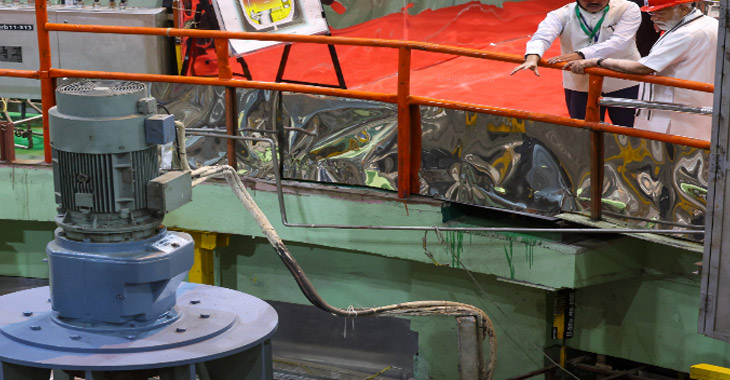
As the indigenously created 500 MWe Prototype Fast Breeder Reactor (PFBR) at Kalpakkam in Tamil Nadu reached first criticality on April 6, India is now prepared to be the second nation, after Russia, to run a commercial-scale fast breeder reactor, according to Union Minister Jitendra Singh on Monday.
The minister said this reactor, which was created by the Indira Gandhi Centre for Atomic Research (IGCAR) and constructed by BHAVINI, represents the beginning of the second phase of India’s three-stage nuclear power program.
It uses uranium-plutonium mixed oxide fuel to generate more fuel than it uses. This was stated to a workshop of legislators and members of the legislative assembly on Small Modular Reactors.
In the third phase of its nuclear plan, India is getting closer to using its enormous thorium deposits thanks to this accomplishment.
India will be the second nation in the world, after Russia, to have a commercial-scale fast breeder reactor in operation, he said.
The importance of this accomplishment, according to Dr. Singh, is that it advances India to the third phase of its nuclear plan, which is focused on utilizing its enormous thorium resources.
With India in the latter phases of building its own, Russia is now the only nation that runs commercial fast breeder reactors (FBRs). Most of these programs, particularly those in the US, the UK, France, Japan, Germany, and China, are currently closed, even though numerous countries have historically built or run experimental fast reactors.
With reference to recent progress in India’s three-stage nuclear program, Dr. Singh stated that the Prototype Fast Breeder Reactor’s successful installation represents a major advance toward the second stage of the program, allowing for more effective nuclear fuel utilization and opening the door for potential use of India’s enormous thorium resources in the future.
The Minister went on to say that nuclear energy would be essential to India’s transition to clean energy and long-term sustainability objectives, especially in reaching the objective of 100 GW of nuclear power capacity by 2047.
Singh emphasized the growing demand for trustworthy and uninterrupted sources of clean energy in industries like data infrastructure, artificial intelligence, and advanced manufacturing, where nuclear power will be essential.
The minister also emphasized the need for programs that promote private sector involvement in increasing India’s nuclear energy capacity, such as the SHANTI Act, policy support, and Small Modular Reactors (SMRs). He stated that the recently established Nuclear Mission, which has a budget of Rs 20,000 crore, intends to build five SMRs by 2033.
In addition, the minister said that SMRs will be helpful for captive power production, especially in industry, densely populated areas, distant communities without grid connections, thermal plant repurposing, and more.
He said that reaching the objective of Net Zero by 2070 would depend on having a balanced energy mix that includes nuclear, renewable, and other clean energy sources.