
India is making a digital leap as it nears 79th Independence Day:PM Modi
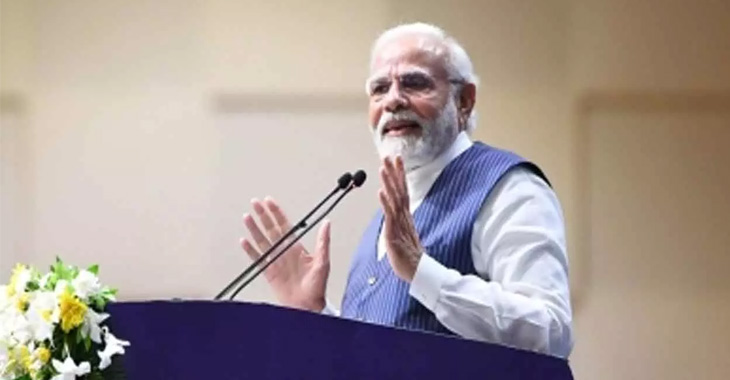
India’s digital governance ecosystem has increased individuals’ independence in accessing services and taking part in governance as the country gets ready for its 79th Independence Day this week.
The empowerment of citizens and inclusive growth are the results of tech-enabled citizen-centric governance.
Launched in 2015, the Digital India program made India a knowledge economy and society with digital capabilities. Service delivery has been transformed by Digital Public Infrastructure (DPI) platforms like as Aadhaar, UPI, and DigiLocker.
Around 19.5 billion transactions totaling more than Rs 25 lakh crore were registered by UPI in the past month. This amounts to over 650 million transactions daily on average, with a daily value of approximately Rs 83,000 crore.
Direct Benefit Transfer (DBT), which decreased corruption and guaranteed the prompt distribution of welfare benefits, was first widely implemented in India. Predictive analytics in healthcare and agriculture, as well as grievance redressal systems, are further examples of how AI is being integrated into governance to provide services that are personalized to the requirements of citizens.
Notable government-led initiatives included Chic-CAD Plus, the MyGov.in platform, and the National AI Portal (INDIAai). A smartphone app called POSHAN Tracker was created for Anganwadi employees to give them up-to-date information on the provision of childcare and nutrition services.
Other noteworthy projects included the Digital Infrastructure for Knowledge Sharing (DIKSHA), a national platform for school instruction, and the AYUSH Information Hub (AIH), which offers reliable and verified information on conventional medical systems.
More than 1,200 central and state government services, such as Aadhaar, DigiLocker, Bharat Bill Payment System, PAN, EPFO, and others, are available in several languages thanks to UMANG (Unified Mobile Application for New-age Governance).
Platforms for e-governance improved public trust while decreasing bureaucratic opacity. To guarantee that services reach underserved groups, the nation is currently creating multilingual platforms and AI-driven solutions.
A government initiative called the IndiaAI Mission established ‘AI Kosh’, a data repository with more than 400 datasets, to help researchers and businesspeople construct multilingual AI solutions.
India is prepared to share technology, knowledge, and expertise gained in tech-enabled governance with the Global South, as Prime Minister Narendra Modi has stated numerous times.