
India Among Top Drivers of Energy Growth Amid Hormuz Crisis
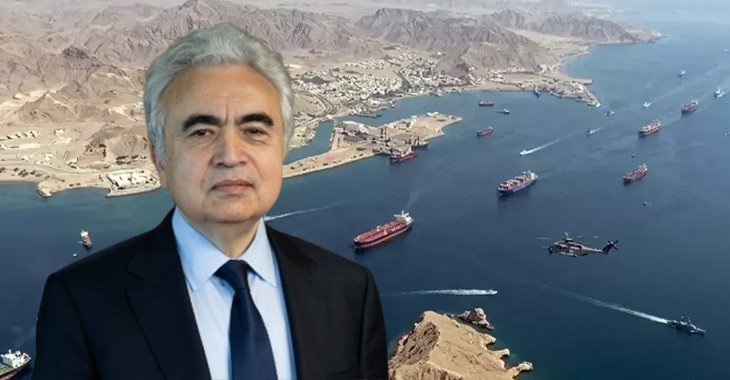
India and Southeast Asia will see the biggest overall increase in energy demand, the International Energy Agency (IEA) said, warning that disruptions through the Strait of Hormuz could permanently reshape global energy supplies and government policies.
The IEA’s World Energy Outlook 2026 highlights rising demand for transport, cooling and other energy services.
“I don’t see any credible pathway for the energy world to return to the way it was before,” IEA Executive Director Fatih Birol said in the report’s accompanying statement.
The Paris-based agency emphasised that its scenarios explore possible outcomes rather than predict the future. The duration of the crisis, government responses and changes in consumer behaviour will determine how the global energy landscape evolves.
The report identifies India among the countries recording a sharp year-on-year rise in electric car sales as consumers respond to the crisis.
It also highlights opportunities for India and Morocco to expand green ammonia production, which could help diversify fertiliser supplies and industrial feedstocks.
Asia faces significant exposure to the disruption. Before the crisis, Asian markets received around 80 per cent of the oil and nearly 90 per cent of the liquefied natural gas (LNG) that passed through the Strait of Hormuz, the IEA said.
By November, disruptions had cut Gulf oil supplies by a cumulative 2.8 billion barrels and gas supplies by 60 billion cubic metres, according to the report.
In its regional assessment, the agency noted that fuel-importing countries were adopting immediate measures to contain energy costs while strengthening supply chains, expanding renewable energy and increasing electricity consumption over the longer term.
The report also found that India’s economic growth had outpaced emissions growth during much of the past decade. It attributed the broader weakening of the link between economic growth and emissions to efficiency improvements, cleaner energy and structural changes across economies.
Globally, solar power and nuclear energy could gain from countries’ growing preference for domestically available energy resources, the agency said.
However, the shift towards energy security may not always support cleaner energy. Asian countries could extend their reliance on domestic coal as they seek to reduce their dependence on imported oil and gas.
A lasting resolution to the Middle East conflict could also reshape energy markets. Recovering oil supplies and delayed LNG capacity expansion could give buyers greater bargaining power and push prices lower, even as countries rebuild their inventories.
The New York Times reported that the findings come as governments gather for the COP31 climate talks in Antalya, Turkey. Delegates are discussing how countries can use the shift towards electrification to reduce their dependence on fossil fuels.
Australia’s Climate and Energy Minister Chris Bowen argued that countries should use the crisis to reduce their long-term dependence on energy supplies vulnerable to overseas conflicts, the newspaper reported.