
Cabinet has approved two new semiconductor factories, boosting Make in India
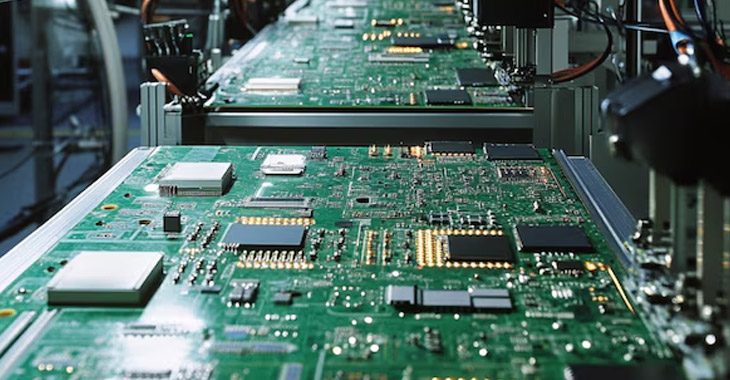
In another move in India’s efforts to bolster its local chip production sector, the Union Cabinet, led by Prime Minister Narendra Modi, approved two additional semiconductor initiatives on Tuesday under the India Semiconductor Mission (ISM).
With a total investment of about Rs 3,936 crore, the projects are anticipated to employ around 2,230 qualified workers in Gujarat.
The permissions cover a semiconductor packaging plant and the nation’s first commercial Mini/Micro-LED display facility using gallium nitride (GaN) technology.
One of the main initiatives will be created by Crystal Matrix Limited in Dholera, Gujarat. The facility will concentrate on compound semiconductor production and assembly, testing, marking, and packaging (ATMP), with a particular focus on creating Mini/Micro-LED display modules. In addition to epitaxy on six-inch wafers, it will also provide GaN foundry services.
The facility is anticipated to manufacture 24,000 sets of RGB wafers as well as 72,000 square meters of display panels each year. These items are likely to be used in a variety of devices, such as televisions, commercial displays, smartphones, automotive displays, and upcoming technologies like smartwatches and extended reality (XR) devices.
The second project, which will establish an Outsourced Semiconductor Assembly and Test (OSAT) facility in Surat, has been approved for Suchi Semicon Private Limited. The intended manufacturing capacity of this facility is over 1,033 million discrete semiconductors annually.
The chips are anticipated to serve important sectors like power electronics, analog integrated circuits, and industrial systems, as well as major industries like the automobile, industrial automation, and consumer electronics industries.
The overall number of projects approved under the India Semiconductor Mission has now reached 12 thanks to these two additions, with a total investment of about Rs 1. 64 lakh crore.
According to the government, these projects will complement India’s increasing prowess in chip design and greatly improve the nation’s semiconductor industry.
The government emphasized that India’s semiconductor momentum is also being fueled by the robust design infrastructure support given to 315 academic institutions and 104 businesses.
Many previously approved projects are currently in various phases of completion, with two units having already started commercial deliveries and two more anticipated to start operating soon.