
Agentic AI Can Boost Banking Efficiency as Adoption Grows
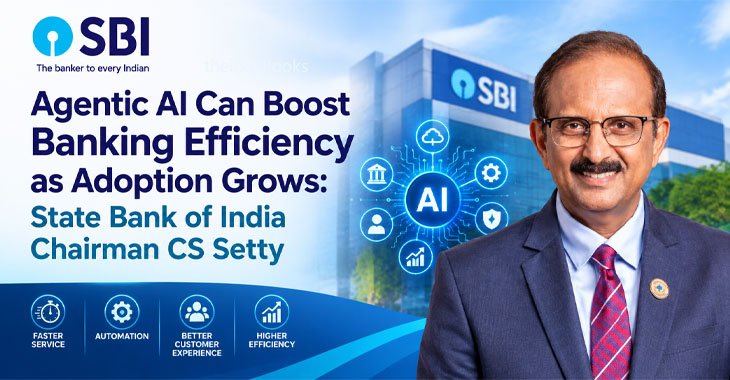
Agentic artificial intelligence (AI) can help banks deliver personalised financial services to thousands of customers. However, financial institutions will need clear frameworks to govern AI agents as the technology moves beyond recommendations to executing decisions, State Bank of India Chairman CS Setty said on Thursday.
Speaking at the Global Fintech Fest 2026, Setty said banks were entering the next phase of AI adoption. He highlighted the deployment of AI agents across financial services as a major opportunity for the sector.
“Artificial intelligence should always augment human resources,” Setty said. He noted that banks may face high initial costs when deploying agentic AI, but lower incremental costs as adoption expands could help them achieve greater economic efficiency.
Setty said banks need to build foundational AI models to develop strategic capabilities in artificial intelligence. He added that agentic AI could help banks deliver more personalised financial services at scale.
However, the diverse and complex nature of the Indian market presents challenges for financial institutions adopting the technology, he said.
Banks have used machine learning (ML) models for several years, but Setty identified the deployment of AI agents across financial services as the next major opportunity.
SBI has emerged as an early adopter of artificial intelligence and machine learning in banking. The bank already uses conventional AI-based approaches for credit assessment and cash flow-based lending, Setty said.
Setty also highlighted the role of India’s digital infrastructure in accelerating technology adoption. “India has successfully converted digital infrastructure into trust and then converted that trust into scale,” he said.
As banks integrate agentic AI more deeply into their operations, they will need clear frameworks covering the identity and authentication of AI agents, customer consent and transaction limits, according to Setty.
He said banks must also strengthen accountability as AI systems move beyond providing recommendations and start executing decisions.