
World Patient Safety Day 2026: A Message for Safer Healthcare
Every year, millions of people enter hospitals, clinics, diagnostic centres and pharmacies expecting one basic promise: healthcare should help them, not harm them. Yet mistakes in diagnosis, medication, communication, treatment, follow-up and care coordination can put patients at risk.
World Patient Safety Day, observed globally on September 17, brings this concern into public focus and reminds governments, healthcare professionals, institutions, patients and families that safety must remain at the heart of healthcare.
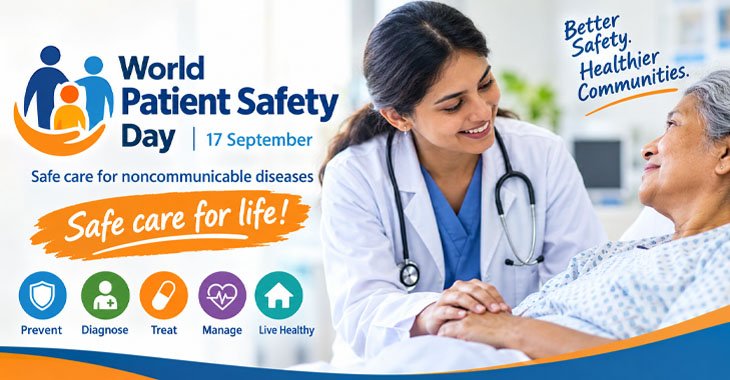
The World Health Organization (WHO) has chosen “Safe care for noncommunicable diseases” as the theme for World Patient Safety Day 2026, with the slogan “Safe care for life!” The campaign focuses on people living with conditions such as cardiovascular diseases, cancer, diabetes and chronic respiratory diseases, who often need healthcare for years or even throughout their lives.
The message extends beyond hospitals. It asks society to see patient safety as a shared responsibility that involves everyone who touches a person’s healthcare journey.
Why World Patient Safety Day Matters
The WHO established World Patient Safety Day after the 72nd World Health Assembly adopted a resolution in May 2019 that recognized patient safety as a global health priority. The resolution designated September 17 as the annual day for raising awareness and encouraging action to reduce avoidable harm in healthcare.
The need remains significant.
WHO estimates that around one in 10 patients experiences harm during healthcare, and at least half of that harm may be preventable. The organization also identifies patient harm from adverse events as a major global public health concern.
These figures turn patient safety from a medical issue into a social issue.
A patient who receives the wrong medication may face additional illness, financial pressure and emotional distress. A delayed diagnosis can change the course of a person’s life. Poor communication between healthcare providers can result in missed information. An unclear discharge instruction can send a patient back to the hospital.
Each incident affects more than the individual.
Families may need to spend additional money on treatment. Caregivers may miss work. Children may lose time with parents. Older people may lose independence. Healthcare workers may experience emotional and professional consequences when preventable incidents occur.
That makes patient safety a responsibility that reaches hospitals, homes, workplaces and communities.
The 2026 Message: Safe Care for Life
The 2026 campaign puts noncommunicable diseases at the centre of the patient-safety conversation.
NCDs often require continuous monitoring, repeated consultations, regular medicines, diagnostic tests, lifestyle changes and long-term follow-up. Patients may move between general practitioners, specialists, hospitals, laboratories, pharmacies and home-based care.
Every transition creates another opportunity for something to go wrong.
A patient might receive different instructions from two providers. A medication list might not reach the next doctor. A test result might not receive timely follow-up. A patient might misunderstand how to use a medical device. A warning sign might go unnoticed.
WHO therefore emphasizes safety across the entire continuum of care, from prevention and early detection to diagnosis, treatment, long-term management and self-care.
The slogan “Safe care for life!” captures that idea in simple terms.
Safety should not begin when a patient enters an emergency department. It should begin with prevention, health information and early screening. It should continue through diagnosis, treatment and recovery. It should also continue at home.
What World Patient Safety Day Tells Society
World Patient Safety Day sends several important messages to society.
1. Patients must become active participants
For many years, healthcare followed a model in which doctors made decisions and patients followed instructions. Modern patient-safety thinking places greater emphasis on partnership.
Patients can ask questions, confirm their medicines, understand their diagnosis, check follow-up instructions and raise concerns when something seems wrong.
WHO’s 2026 campaign specifically encourages people living with NCDs and their caregivers to stay informed, understand their conditions, maintain accurate health records and speak up about safety concerns.
This does not transfer responsibility from healthcare professionals to patients. Instead, it creates another layer of protection.
A patient who asks, “Why am I taking this medicine?” may prevent a medication mistake. A caregiver who notices a sudden change in symptoms may help a doctor identify deterioration earlier. A patient who confirms an appointment or test result can reduce the possibility of a missed follow-up.
Small conversations can prevent serious consequences.
2. Healthcare workers need safe systems
Patient safety does not depend only on individual attention.
Doctors, nurses, pharmacists, technicians and other healthcare workers operate within systems. Those systems determine how they receive information, document treatment, communicate with colleagues, report incidents and respond to emergencies.
WHO emphasizes the need for strong health systems, supported healthcare workers and better coordination to improve safety in NCD care.
A hospital can reduce risks when it establishes clear procedures for medication administration, patient identification, referrals, handovers and discharge.
Training also matters.
Healthcare workers need opportunities to update their knowledge, learn from incidents and discuss risks without fear. A culture that encourages reporting can help institutions identify weaknesses before those weaknesses cause repeated harm.
3. Mistakes Should Lead to Learning
Patient safety does not mean pretending that healthcare can eliminate every complication.
Medicine involves complex diseases, unpredictable responses and difficult decisions. However, healthcare systems can identify many preventable risks and learn from incidents.
WHO has repeatedly promoted a culture that encourages reporting, learning and improvement.
In 2019, WHO Director-General Dr Tedros Adhanom Ghebreyesus said:
“No one should be harmed while receiving health care.”
He also called for a patient-safety culture that promotes partnership with patients, encourages reporting and learning from errors, and creates an environment where healthcare workers can strengthen safety.
That message remains relevant.
A healthcare institution should ask what happened, why it happened and how it can prevent recurrence. Blaming one individual may close a conversation. Learning from an incident can improve the entire system.
4. Medication Safety Deserves Attention
Medicines play a central role in NCD care.
People with diabetes, hypertension, heart disease, cancer and other chronic conditions may take multiple medicines. They may also see several doctors, visit different pharmacies or change prescriptions over time.
This complexity creates risks.
Patients can confuse medicines with similar names. They can misunderstand doses. Healthcare providers can miss information about existing medicines. Patients can accidentally combine medicines that require caution.
WHO has previously highlighted medication-related harm as a major patient-safety challenge.
Ahead of World Patient Safety Day 2022, Dr Tedros warned:
“Medicines are powerful tools for protecting health.”
He also stressed that incorrectly prescribed, incorrectly taken or poor-quality medicines can cause serious harm.
The message for society remains straightforward: patients should know what they take, why they take it and how they should take it.
Healthcare professionals should also maintain accurate medication records and communicate changes clearly.
5. Families and Caregivers Matter
A patient does not always navigate healthcare alone.
Children depend on parents and caregivers. Older adults may depend on family members. People with disabilities or complex chronic conditions may need assistance with appointments, medicines, transportation and daily care.
Caregivers often notice changes that patients or professionals may miss.
For that reason, patient safety requires meaningful engagement with families.
WHO’s 2026 campaign calls for people living with NCDs to participate in their care and encourages health practitioners to treat them as partners in decision-making.
The approach also changes the role of caregivers. Instead of treating them simply as visitors or companions, healthcare systems can recognize them as valuable sources of information and support.
6. Technology Must Improve Safety, Not Complicate It
Digital health has changed the way people access healthcare.
Electronic health records, telemedicine, health applications, electronic prescriptions and artificial intelligence can help improve diagnosis, monitoring and communication. At the same time, technology can create new risks when systems lack proper safeguards.
A wrong data entry can travel through a digital record. A poorly designed interface can confuse users. A patient may misunderstand information generated through an automated system.
WHO has emphasized that emerging technologies can create both opportunities and safety risks. Its work on artificial intelligence in healthcare stresses the importance of ethics, human rights and safeguards alongside technological development.
Technology should therefore support human judgment rather than replace responsibility.
7. Healthcare Quality and Patient Safety Go Together
People often discuss access to healthcare without giving equal attention to the quality of that care.
Getting an appointment matters. Receiving treatment matters. But safe and effective treatment matters just as much.
WHO describes quality healthcare as safe, effective and people-centred, alongside other dimensions such as timeliness, equity and integration.
Dr Tedros has also emphasized that quality does not happen automatically. He has described quality as requiring vision, planning, investment, compassion, careful execution and monitoring.
That principle applies directly to patient safety.
A hospital may have advanced equipment, but staff still need appropriate training. A clinic may offer modern treatment, but patients still need clear communication. A health system may expand access, but it must also maintain standards that protect patients.
8. Patient Safety Connects With Universal Health Coverage
Universal health coverage aims to ensure that people can access the health services they need without financial hardship.
But access alone cannot guarantee better health.
A person may reach a hospital but still face risks from delayed diagnosis, medication errors, poor infection control or fragmented follow-up.
WHO has therefore linked patient safety with broader efforts toward universal health coverage.
Tedros previously stated:
“Without quality, universal health coverage remains an empty promise.”
He emphasized that quality requires planning, investment, compassion and rigorous monitoring from national systems to individual healthcare facilities.
This connection carries an important message for policymakers: expanding healthcare access and strengthening healthcare safety should move together.
9. Society Must Create a Culture of Speaking Up
One of the strongest messages behind World Patient Safety Day involves communication.
- Patients should feel comfortable asking questions.
- Healthcare workers should feel comfortable reporting incidents.
- Families should feel comfortable raising concerns.
- Hospital administrators should listen to those concerns.
- Policymakers should use evidence and patient experiences to strengthen systems.
- This culture requires trust.
WHO’s work on patient-safety rights has emphasized the importance of involving patients, families and communities in healthcare safety. In 2023, Tedros described patient safety as a collective responsibility and stressed that health systems should work with patients, families and communities so people can become informed advocates in their own care.
That approach changes the relationship between the healthcare system and the public.
Instead of asking patients to remain silent recipients of care, it encourages them to become informed partners.
A Message for Hospitals, Governments and Communities
World Patient Safety Day also asks institutions to look beyond individual incidents.
Healthcare leaders can strengthen safety by improving staff training, standardizing procedures, monitoring risks, improving communication and encouraging incident reporting.
Governments can integrate safety into health policies, strengthen primary healthcare and invest in the healthcare workforce.
Communities can improve health literacy and help people understand preventive care.
Civil society organizations can amplify patient voices and highlight barriers such as stigma, discrimination and limited health information. WHO’s 2026 calls to action specifically encourage these groups to promote health literacy, support safer care and help people speak up when they face safety concerns.
Every part of society therefore has a role.
The Special Importance of Noncommunicable Diseases
The 2026 focus also reflects the enormous impact of NCDs.
WHO identifies cardiovascular diseases, cancers, diabetes and chronic respiratory diseases among the major NCDs. These conditions often require long-term management and repeated interaction with healthcare services. WHO says NCDs account for 74% of deaths worldwide, making safe and continuous care particularly important.
The long-term nature of these diseases makes patient safety different from a one-time healthcare encounter.
A person with diabetes may need regular testing and medication adjustments for decades. A cancer patient may undergo multiple rounds of treatment and monitoring. Someone with cardiovascular disease may need long-term medicines, lifestyle changes and repeated consultations.
Every interaction creates another opportunity to improve safety.
From Awareness to Action
World Patient Safety Day should not remain a one-day awareness event.
The orange lights that appear on buildings and landmarks on September 17 offer a visible symbol of solidarity. WHO encourages landmarks and public spaces to illuminate in orange as part of the global campaign.
- But the real impact must happen after the lights go out.
- Hospitals can review their safety systems.
- Doctors and nurses can strengthen communication.
- Patients can maintain accurate health records.
- Families can ask questions.
- Pharmacists can reinforce medication instructions.
- Policymakers can invest in safer health systems.
- Technology developers can build stronger safeguards.
- Communities can promote reliable health information.
- These actions can turn a campaign into lasting change.
The Message We Must Carry Forward
World Patient Safety Day ultimately delivers a simple message: healthcare must protect the people it intends to help.
The campaign also reminds society that safety does not belong to one profession or one institution. It belongs to everyone.
Dr Tedros captured this principle clearly in 2023 when he said:
“Patient safety is a collective responsibility.”
He followed that message with an equally direct statement:
“Because if it’s not safe, it’s not care.”
Those words give World Patient Safety Day a meaning that extends beyond September 17.
Safe healthcare requires knowledgeable professionals, strong institutions, responsible policies, informed patients and engaged families. It requires people to report problems, learn from mistakes and continuously improve systems.
Most importantly, it requires society to recognize that patients should never become passive participants in their own healthcare.
The 2026 slogan, “Safe care for life!”, expands that responsibility across the entire health journey.
From prevention to diagnosis, from treatment to recovery, and from hospitals to homes, safety must remain a constant priority.
World Patient Safety Day therefore asks society to do more than remember the importance of safe healthcare for one day. It asks everyone to help build a healthcare culture where every question matters, every warning sign receives attention, every error creates an opportunity to learn, and every patient receives care with safety, dignity and respect.
That is the message worth carrying forward—not only on September 17, but every day.