
Top 5 Indian Educators Who Transformed Traditional Education into Digital Learning
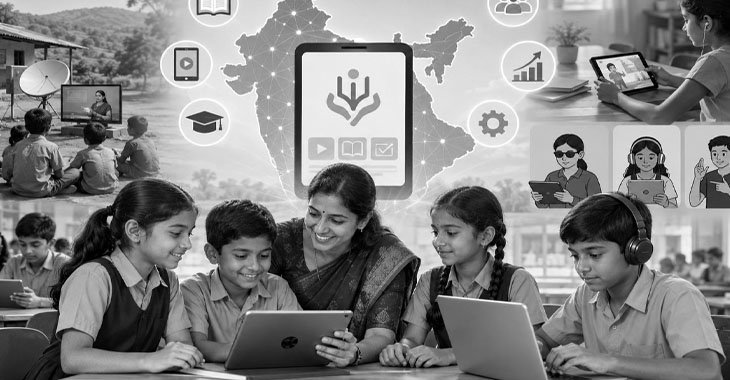
For generations, Indian education followed a familiar pattern. Students attended physical classrooms, teachers explained lessons using blackboards, and learning was largely restricted to textbooks, notebooks and coaching centres. Access to good teachers often depended on where a student lived and how much their family could afford.
A student living in a small village in Bihar or Uttar Pradesh might have had to travel hundreds of kilometres to access the same quality of coaching available to students in Delhi, Kota or Bengaluru.
Then came the internet revolution.
Affordable smartphones, cheaper data plans, YouTube, online learning applications and digital classrooms began changing the Indian education landscape. Teaching was no longer restricted to a physical classroom. Students could watch lectures, attend live sessions, download notes and prepare for competitive examinations from their homes.
However, technology alone did not create this transformation. It required educators who understood the problems students faced and were willing to experiment with new ways of teaching.
Some started by uploading free lectures on YouTube. Others converted their traditional coaching businesses into digital learning platforms. Some even introduced technology into government-school textbooks.
Here are five Indian educators whose contributions helped bridge the gap between traditional teaching and digital education.
The selection considers their contribution to digital learning, reach, teaching innovation and influence rather than presenting a formal ranking.
1. Byju Raveendran – The Educator Who Popularised App-Based Learning
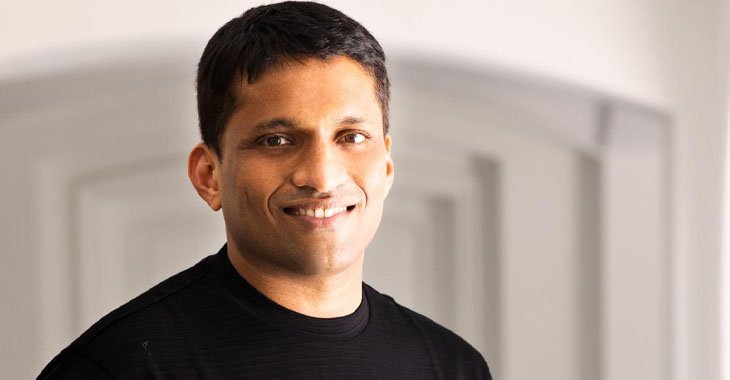
Name: Byju Raveendran
Organisation: BYJU’S / Think & Learn
Known for: Interactive video lessons, personalised learning and educational applications.
Digital education contribution: Taking classroom-style teaching into mobile applications and technology-enabled learning.
From a traditional classroom to a digital learning empire
One of the most recognisable names in India’s edtech revolution is Byju Raveendran. His journey demonstrates how an educator’s traditional teaching experience can become the foundation of a technology-driven educational business.
Born in Azhikode, Kerala, Byju came from a family of teachers. His parents were educators, and he developed an interest in mathematics and learning from an early age. Interestingly, he initially worked as an engineer rather than pursuing teaching as a profession.
His teaching journey began when he started helping students prepare for competitive examinations, particularly the Common Admission Test (CAT).
What made him different was his ability to explain difficult mathematical concepts in simple language. His teaching sessions gradually attracted thousands of students.
Instead of restricting his classes to small groups, he started conducting large-scale workshops in auditoriums and stadiums. This was an important turning point because he realised that technology could help him reach students beyond the limitations of physical classrooms.
In 2009, he experimented with broadcasting recorded lessons through technology-enabled learning centres. Later, he established Think & Learn in 2011, and the BYJU’S learning application was launched in 2015.
The platform introduced a different approach to education. Instead of relying entirely on traditional textbook explanations, students could learn through animated videos, interactive lessons, quizzes and visual demonstrations.
Subjects such as mathematics and science became easier to understand through illustrations and real-world examples.
How he transformed traditional education
BYJU’S helped popularise three important changes:
- Visual learning: Complicated concepts were explained using animations and illustrations.
- Self-paced education: Students could revisit lessons and learn according to their own speed.
- Personalised learning: Technology allowed educational content to be organised around individual learning requirements.
The platform also demonstrated that Indian educational content could reach learners internationally.
Byju’s was among the companies that made parents, teachers and students more comfortable with the idea of learning through smartphones.
In a 2021 interview with YourStory, Raveendran explained his vision:
“We’d like to play a role in defining the online schools of tomorrow with our tech-enabled platform, self-learning content, and a teaching layer on top.”
This statement reflected his belief that digital education should complement traditional schooling rather than simply replace it.
Currently, where does he stand? (November 2026)
Byju Raveendran’s present position is considerably different from the extraordinary growth period of BYJU’S.
The company, once one of India’s most valuable startups, entered insolvency proceedings following financial difficulties and disputes with lenders and investors.
The situation has involved proceedings in multiple jurisdictions. In May 2026, the Supreme Court declined to interfere with the restoration of the original Committee of Creditors in the insolvency proceedings. In November 2026, the NCLT Bengaluru also dismissed applications by Byju Raveendran and his brother seeking to participate in the insolvency proceedings in the manner requested.
His legacy: Byju Raveendran helped make app-based, animated and self-paced learning familiar to millions of Indian families. His business’s difficulties do not erase the influence that the early BYJU’S model had on the country’s digital education movement.
2. Alakh Pandey – The Teacher Who Made Online Education Affordable
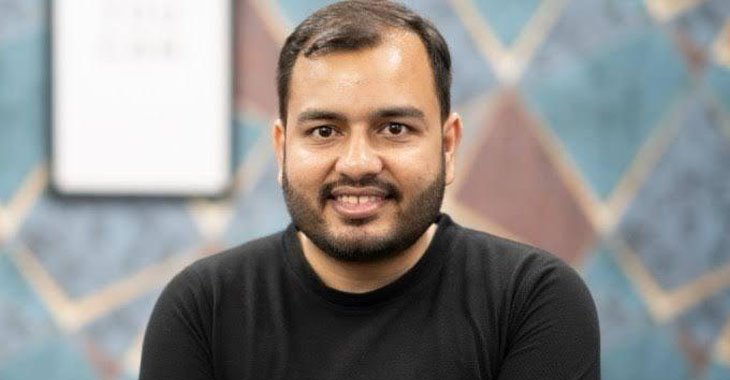
Name: Alakh Pandey
Organisation: PhysicsWallah (PW)
Known for: Affordable online classes, Physics teaching and competitive examination preparation.
Digital education contribution: Making high-quality online coaching accessible to students who could not afford expensive traditional coaching institutes.
From a small classroom to millions of digital learners
If there is one educator whose story represents the power of teaching through the internet, it is Alakh Pandey.
Popularly known as Physics Wallah, Alakh Pandey transformed his passion for teaching into one of India’s most recognisable education platforms.
His journey did not begin in a sophisticated studio or a well-funded technology company. He began teaching students through conventional coaching classes.
He understood an important problem in Indian education: students preparing for examinations such as IIT-JEE and NEET often had to spend considerable amounts of money on coaching.
For students from financially weaker families, accessing quality education was difficult.
Pandey believed that a good teacher should not be accessible only to students who could afford expensive coaching.
In 2014, he started uploading Physics lessons on YouTube. His teaching style was different from conventional lecture-based education. He explained difficult scientific concepts in simple Hindi, used practical examples and maintained a direct connection with students.
His videos gradually developed a loyal student community.
The COVID-19 pandemic became a significant turning point. Physical coaching centres were closed, and students increasingly depended on online classes.
In June 2020, PhysicsWallah formally launched its learning application.
The platform expanded beyond Physics to include Chemistry, Mathematics, Biology and other subjects required for competitive examinations.
How he changed the digital classroom
Alakh Pandey’s biggest contribution was not simply moving classroom lectures online. It was challenging the assumption that quality coaching had to be expensive.
His approach introduced several important changes:
- Affordable learning: Lower-priced courses made competitive examination preparation more accessible.
- Free educational resources: YouTube lectures provided students with an opportunity to understand concepts without immediately purchasing a course.
- Teacher-led digital learning: Students continued learning from familiar teachers rather than depending entirely on automated educational software.
- Interactive online classrooms: Live lessons, recorded lectures, doubt-solving sessions and digital study materials created a more complete learning environment.
His teaching style also demonstrated the importance of regional-language education.
Many students who struggled with English-medium explanations could understand complex concepts through Hindi instruction.
One of his most memorable statements, delivered during his TEDxIITPatna talk, was:
“India is a free country. But education is not and I plan to change that with my team of teachers and students.”
Currently, where does he stand? (November 2026)
Alakh Pandey remains the founder and CEO of PhysicsWallah.
The company reached an important milestone in November 2025 when it entered the stock market through its initial public offering.
PhysicsWallah has also expanded beyond online education by establishing physical learning centres across India. Its business now combines online classes, offline coaching and other educational services.
3. Khan Sir – The Educator Who Took the Classroom to Every Smartphone
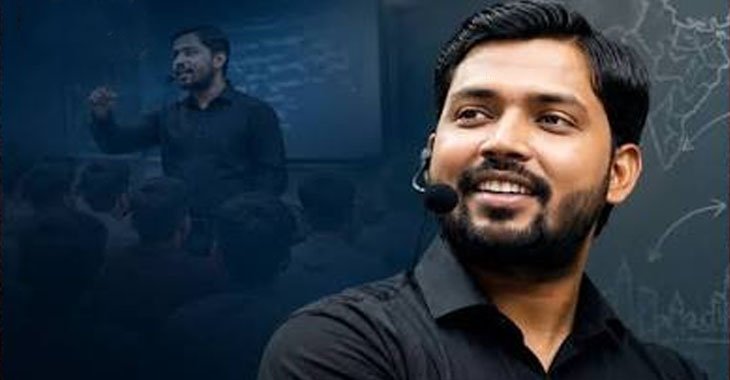
Name: Faizal Khan (popularly known as Khan Sir)
Organisation: Khan GS Research Centre / Khan Global Studies
Known for: General studies, current affairs, geography, history and competitive examination preparation.
Digital education contribution: Making complex subjects understandable through accessible Hindi-language online teaching.
The power of teaching in a language students understand
Traditional Indian education has often placed considerable importance on English-medium instruction.
For many students, especially those from rural and economically weaker backgrounds, understanding English-language textbooks and lectures can become an additional challenge.
Khan Sir recognised that language should not become a barrier to learning.
His teaching journey began with conventional coaching classes in Patna, Bihar. He gradually developed a reputation for explaining difficult topics through simple examples, humour and everyday situations.
His classroom approach was different from conventional coaching lectures.
Instead of simply reading information from textbooks, he connected historical events, geographical concepts, political developments and current affairs with situations students could easily understand.
His teaching became particularly popular among students preparing for government examinations.
However, his biggest breakthrough came when his classroom teaching moved to YouTube.
Students who could not travel to Patna could now access his lessons through smartphones.
This created a new educational opportunity for learners from smaller towns and villages.
A student preparing for a competitive examination in a remote district could now listen to the same teacher as someone studying in a major city.
How he transformed traditional education
Khan Sir’s contribution to digital learning can be understood through four important developments.
1. Regional-language education
His Hindi-based teaching made subjects more accessible to students who were uncomfortable with English-language instruction.
2. Learning through humour
He introduced humour and relatable examples into complicated subjects. This made long lessons easier to follow and remember.
3. Affordable digital education
His free online lessons provided students with access to educational content without requiring them to immediately purchase expensive coaching packages.
4. Classroom-to-YouTube transformation
His teaching style retained the familiarity of a traditional classroom while reaching a much larger digital audience.
During an ABP Network event in 2023, he explained:
“We teach students as a friend to make them confident.”
Currently, where does he stand? (November 2026)
Khan Sir continues to be associated with Khan Global Studies and his online educational presence.
His influence extends across YouTube, digital courses and physical coaching operations.
However, his institution has also faced serious challenges.
In June 2026, the Indian Express reported that his Patna institute had been shut following a violent incident involving a rival coaching establishment. Khan Sir approached the Patna High Court seeking relief, including reopening of the institute. The matter was part of an ongoing legal dispute at the time of reporting.
His legacy: Khan Sir demonstrated that students do not necessarily need expensive English-medium classrooms to understand difficult subjects. A good teacher, relatable explanations and access to the internet can make education more inclusive.
4. Aman Dhattarwal – The Educator Who Made Online Learning Relevant to College Students
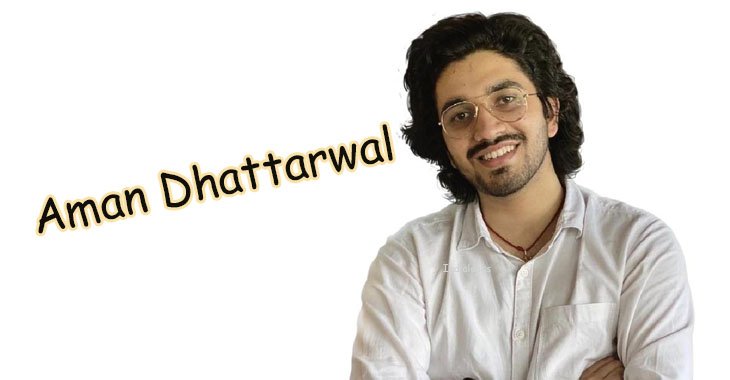
Name: Aman Dhattarwal
Organisation: Apna College / Apni Kaksha
Known for: Engineering education, coding, career guidance and college preparation.
Digital education contribution: Making technology education and career guidance accessible to college students through online platforms.
From classroom teaching to the digital campus
While many digital educators focused primarily on school students and competitive examinations, Aman Dhattarwal identified another important group that needed educational support: college students.
India has millions of students enrolled in engineering and other undergraduate programmes.
However, getting admission into college does not necessarily mean that students receive all the practical knowledge required to build a career.
Many students struggle with programming, communication skills, interview preparation, internships and understanding the employment market.
Dhattarwal recognised this gap.
He began creating educational videos that addressed the everyday challenges faced by school and college students.
His content covered topics such as:
- Engineering college selection and admission guidance.
- Class 12 examination preparation.
- Programming and coding.
- Career opportunities after graduation.
- Resume building and interview preparation.
- Internships and professional development.
His approach was different from conventional classroom teaching because he addressed questions that students frequently struggled to get answered in their institutions.
Through YouTube, he created a space where students could access educational guidance without necessarily enrolling in expensive offline coaching programmes.
One of the most important developments in his journey was the creation of Apna College.
The platform focused on practical technical skills, particularly programming and software development.
Students could access structured courses, coding lessons and career-oriented educational resources.
How he changed the traditional education model
Dhattarwal’s contribution was important because he helped expand the definition of digital education.
Traditional education often concentrates on academic qualifications, examinations and theoretical knowledge.
However, the modern employment market also requires practical skills.
His educational model focused on connecting academic learning with industry expectations.
1. Career-focused learning
His content helped students understand what happens after completing their degrees.
2. Digital coding education
Programming lessons became accessible to students who might not have access to expensive computer-science training.
3. College guidance
Students could explore information about universities, engineering colleges and career choices through digital content.
4. Learning beyond the syllabus
His content encouraged students to acquire additional skills outside their regular university curriculum.
This is particularly important in India, where students often depend on external resources to develop industry-relevant skills.
Currently, where does he stand? (November 2026)
Aman Dhattarwal continues to be publicly associated with Apna College and its educational ecosystem.
His public professional profile describes him as the founder and CEO of Apna College, while the platform’s educational focus remains on coding, technical learning and career preparation.
His work represents the expansion of online education beyond school subjects and entrance examinations into employability and professional skills.
The importance of this category of education has increased as students increasingly seek practical training alongside university degrees.
It is also worth recognising that digital career education has limitations. Watching coding videos alone cannot replace practical projects, internships, mentorship and real-world experience.
That is why the next phase of such platforms will depend on how effectively they connect digital lessons with demonstrable student skills.
His legacy: Aman Dhattarwal helped make online education relevant to a generation of students looking beyond school examinations. His work represents a transition from learning merely to pass examinations towards learning to build careers.
5. Ranjitsinh Disale – The Teacher Who Brought Digital Learning into School Textbooks
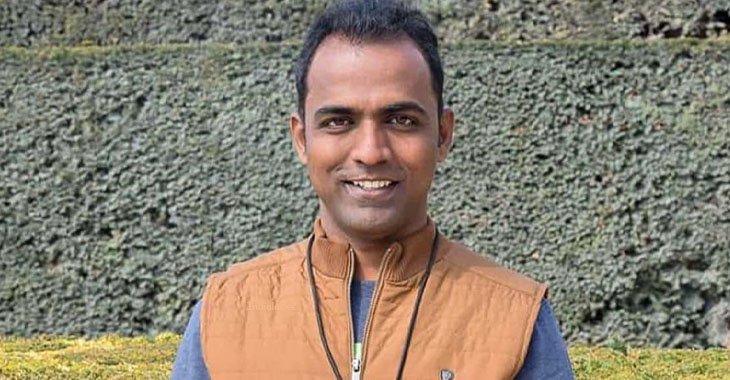
Name: Ranjitsinh Disale
Organisation: Educational initiatives, Global Teacher Community and international education work.
Known for: QR-code-enabled textbooks, girls’ education and inclusive learning.
Digital education contribution: Integrating digital resources directly into traditional printed textbooks.
The teacher who connected textbooks with technology
When discussing India’s digital education revolution, it is easy to focus entirely on large edtech companies and YouTube educators.
However, one of the most interesting transformations came from an ordinary schoolteacher in Maharashtra.
Ranjitsinh Disale became internationally recognised for introducing QR codes into school textbooks.
His journey began in 2009 when he joined a government primary school in Paritewadi village in Solapur district, Maharashtra.
The school faced several challenges, including poor infrastructure and low student attendance.
He realised that traditional teaching methods alone were not sufficient to engage children.
He began experimenting with educational videos, presentations and interactive teaching resources.
Students enjoyed these materials and wanted to access them outside classroom hours.
But sharing large files through mobile phones was inconvenient.
That was when he discovered the potential of QR codes.
Instead of asking students to download separate educational files, he started linking digital learning materials directly to the chapters in their textbooks.
Students could scan a QR code using a smartphone and access additional learning resources.
These included:
- Educational videos.
- Audio learning materials.
- Interactive presentations.
- Chapter-related explanations.
- Additional learning assignments.
This was a relatively simple innovation, but it created an important connection between traditional and digital education.
Students no longer had to choose between printed textbooks and technology. Both could work together.
How he transformed traditional education
Disale’s approach was particularly significant because it could be integrated into public education systems.
Unlike expensive educational applications, QR codes could be incorporated into existing printed textbooks.
His approach offered three major benefits.
1. Learning beyond the classroom
Students could access additional educational resources even after returning home.
2. Personalised learning
Digital resources allowed students to revisit lessons and understand concepts at their own pace.
3. Greater educational inclusion
The approach created opportunities to provide educational material in local languages and improve access to learning resources.
His work eventually influenced wider textbook digitisation initiatives.
Harvard Graduate School of Education documented how his QR-code initiative developed from a classroom experiment into a broader educational innovation.
In 2020, he received the Global Teacher Prize, bringing international recognition to his work.
Harvard Graduate School of Education, One of his most meaningful statements about teaching is:
“Being a teacher is not just about delivering lessons—it is about understanding, evolving, and staying relevant in a rapidly changing world.”
Currently, where does he stand? (November 2026)
Ranjitsinh Disale has moved beyond his original classroom-based work into international education research and development.
Harvard’s Graduate School of Education identifies him as an Education Master’s alumnus, while Harvard Kennedy School’s Growth Lab profile describes his involvement in education policy and development initiatives.
His earlier work included serving as an education adviser to the Government of Maharashtra and contributing to the World Bank’s Global Coach Program.
He has also continued advocating for inclusive education, educational technology and opportunities for underserved communities.
His contribution is particularly important because it demonstrates that digital education does not always require a sophisticated application or an expensive technology company.
His legacy: Ranjitsinh Disale showed that digital transformation can begin inside an ordinary government school. His work helped demonstrate how technology can strengthen traditional education rather than eliminate it.
Comparison: Five Educators Who Changed Indian Education
Educator Major contribution Digital learning model
Byju Raveendran Interactive learning applications App-based education
Alakh Pandey Affordable competitive exam preparation YouTube and live classes
Khan Sir Accessible Hindi-medium teaching YouTube and online coaching
Aman Dhattarwal Coding and career education Digital skill development
Ranjitsinh Disale QR-enabled school textbooks Technology-integrated schooling
What did these five educators change?
Their journeys reveal five major transformations in the Indian education system.
- Access to education: Students no longer need to live in major cities to learn from popular teachers.
- Affordable learning: Free online lessons and lower-cost courses have created alternatives to expensive coaching.
- Language inclusivity: Hindi and regional-language educational content has helped reach students beyond English-medium audiences.
- Self-paced learning: Students can pause, replay and revisit lessons according to their individual needs.
- Technology integration: Digital education now includes applications, recorded lectures, live classes, QR codes and interactive resources.
Conclusion: The Future of Education Is Not Just Digital, It Is Hybrid
India’s transition from traditional classrooms to digital learning has been one of the most significant developments in its educational history.
The five educators discussed above approached this transformation from different directions.
Byju Raveendran popularised app-based learning. Alakh Pandey made online coaching more affordable. Khan Sir brought regional-language teaching to millions of screens. Aman Dhattarwal connected digital learning with professional skills. Ranjitsinh Disale demonstrated how technology could be integrated into traditional textbooks.
Their journeys also reveal an important lesson: digital education is not simply about recording classroom lectures and uploading them online.
It is about making learning more accessible, understandable, affordable and relevant.
However, digital education cannot replace everything that traditional schools provide. Teachers offer mentorship, discipline, emotional support, social interaction and the ability to understand students’ individual challenges.
The future will therefore depend on combining the strengths of both systems.
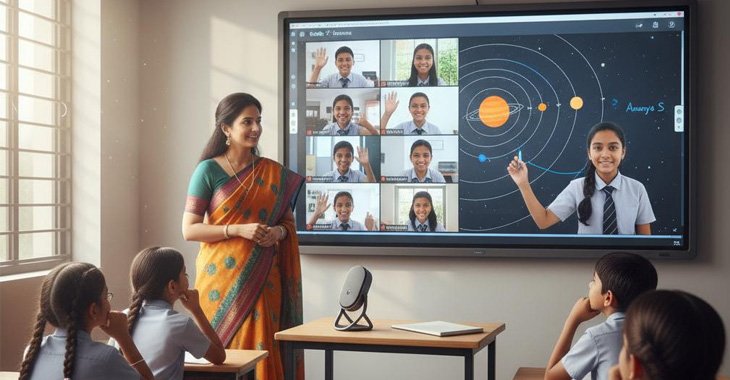
A student may learn mathematics through an online lecture, clarify doubts with a teacher in a physical classroom, practise through an educational application and revise through a digital textbook.
That is the real transformation.
The classroom has not disappeared. It has expanded beyond its walls.
And these five educators have played important roles in making that possible.