
PM Modi emphasizes the AI Impact Summit 2026’s success
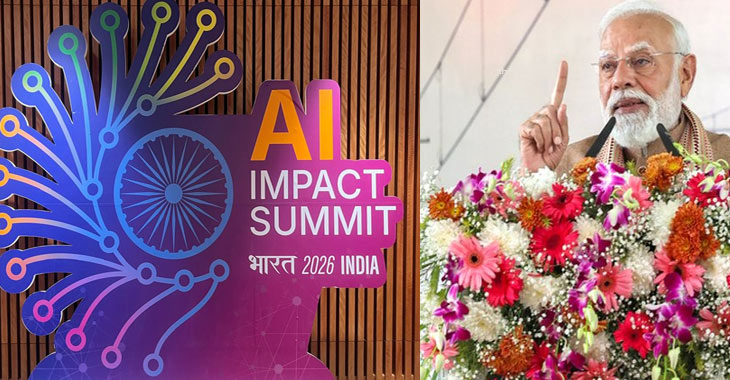
At Tuesday’s AI Impact Summit in Delhi, Prime Minister Narendra Modi emphasized that India’s organizing principles—sovereignty over data, inclusiveness by design, and accountability by default—were inspired by its own civilizational urge.
PM Modi was alluding to an article on X written by Union Minister Hardeep Singh Puri about the accomplishments at the AI Impact Summit 2026, the largest conference of its kind ever held in the Global South and attended by more than 20 heads of state and more than 500 AI leaders from over 100 countries.
According to the minister, the first Global South country to host the global AI summit series under Prime Minister Modi’s leadership did more than just organize a discussion; it also outlined the terms on which it plans to compete: a Delhi Declaration that alters the rules governing AI governance; digital infrastructure handling almost half of all real-time payments worldwide; investment commitments in the hundreds of billions; sovereign models created from the ground up; and entry into the supply chain security architecture of the AI era.
Puri outlined the PM’s MANAV vision, which includes: legal validity so that every deployed system is subject to democratic scrutiny; broad access so that benefits reach a farmer in Madhya Pradesh as surely as an engineer in Bengaluru; ethical guardrails; accountable governance; and sovereignty over data so that the raw material of intelligence is not extracted the way commodities once were.
The minister went on to say that PM Modi’s proposal to allow AI to fly freely while maintaining human control draws a boundary that many developed nations have been hesitant to draw.
The Delhi Declaration, which was adopted at the summit and is already regarded as the first significant AI governance blueprint from the Global South, gives these principles multilateral weight. It takes a development-oriented stance and is based on a techno-legal approach that prioritizes flexible guardrails over strict compliance. Its three pillars—people, planet, and progress—organize international cooperation.
The majority of the globe does not speak English, and population-scale solutions like BharatGen, which supports 22 Indian languages, recognize this.
Entry barriers are reduced worldwide via a proposed global compute bank that is based on India’s subsidized GPU access at Rs 65 per hour. AI extractivism—the practice of using data from developing countries to train models that those countries must then pay to use—is challenged by the stress on data sovereignty, Puri continued.