
GST changes will result in a double bonus on Diwali: PM Modi
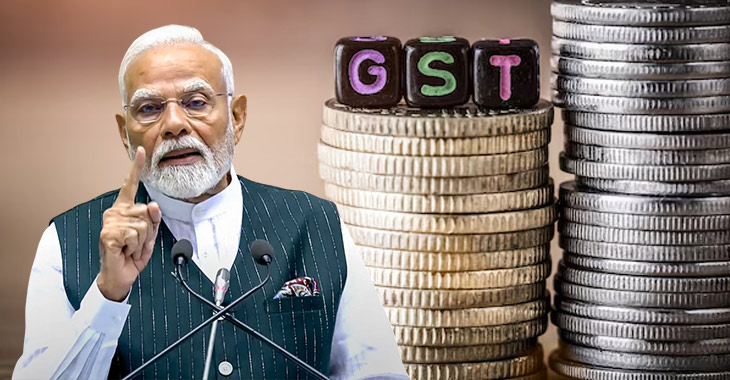
The next generation GST reform, which is being prepared to lower the prices of products and services to assist the poor and middle class, will give the country’s residents a double bonus this Diwali, Prime Minister Narendra Modi announced on Sunday.
“For us, reform means the expansion of good governance, and continuous focus is being placed on reforms,” the prime minister stated during his speech at the opening of two significant highway projects in Delhi.
“A next-generation GST reform is being contemplated as part of this endeavor. The GST overhaul will give citizens a double benefit this Diwali“, PM Modi remarked.
He stated that all states have been given access to the entire framework and hoped that they would all support this Indian government endeavor.
In order to “make this Diwali even more special,” the prime minister encouraged that the procedure be completed quickly.
The Prime Minister added that the administration intends to further simplify the GST and update tax rates, emphasizing that every household will profit from this reform, particularly the middle class and impoverished. These reforms will benefit dealers, businesspeople, and entrepreneurs of all sizes.
According to official sources, the Finance Ministry submitted its proposal to the GST Council on Friday to implement two GST rates going forward: 5% and 18% on all commodities.
The present four slabs in the goods and services tax (GST) regime would be replaced by the proposed two-slab regime, which will eliminate the 12 and 28 percent slabs.
The lower GST rate of 5% will apply to the following commodities: insurance, handicrafts, health-related items, and necessities used by the average person. The remaining items, such as manufactured goods like TVs and refrigerators, will fall under the 18% slab.
Nonetheless, sin and luxury items like tobacco, cigarettes, sugary drinks, and pan masala will remain subject to a separate 40% GST tax category.
According to the government, the rationalization of the GST will significantly increase consumer spending and promote economic expansion.
To accept the idea, the GST Council—which consists of state finance ministers—is anticipated to convene in September.
Following Prime Minister Narendra Modi’s declaration in his Independence Day speech from the Red Fort that the next generation of GST reforms would be presented by Diwali and offer “substantial” tax relief to the general public and small enterprises, the proposal was made.
The rationalization of tax rates to benefit all societal segments, particularly the average person, women, students, middle class, and farmers, is one of the main areas designated for next-generation changes.
One of the recommendations is to lower taxes on both aspirational and everyday goods. This would increase affordability, increase consumption, and make aspirational and necessary products more widely available.
In order to reduce the accumulation of input tax credits, inverted duty structures are being corrected to bring input and output tax rates into alignment. This would encourage the addition of domestic value.