
Debasnana Purnima of Lord Jagannath: The Sacred Bathing Festival
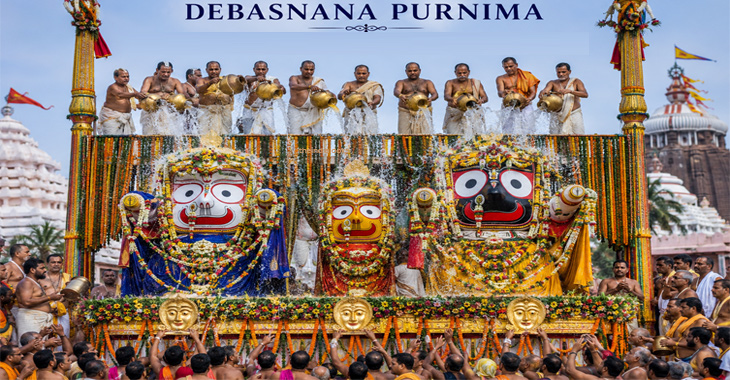
Among India’s countless spiritual festivals, Debasnana Purnima, also known as Snana Purnima, occupies a special place in the hearts of millions of devotees of Lord Jagannath.
Celebrated annually on the full moon day (Purnima) of the Hindu month of Jyeshtha, this grand ritual marks the ceremonial public bathing of Lord Jagannath, Lord Balabhadra, Devi Subhadra, and Sudarshana Chakra at the revered Jagannath Temple in Puri, Odisha.
The festival is not merely a religious ceremony but a profound expression of devotion, tradition, and divine symbolism. It also serves as the official beginning of the annual Rath Yatra celebrations, one of the world’s largest religious gatherings.
Every year, thousands of pilgrims gather in Puri to witness this sacred event, while millions more watch from around the world, captivated by the grandeur and spiritual significance of the ceremony.
The Origin of Debasnana Purnima
The history of Debasnana Purnima is deeply rooted in Hindu scriptures and temple traditions dating back centuries. According to the Skanda Purana and other ancient texts, Lord Jagannath desired to grant devotees the opportunity to witness Him outside the sanctum sanctorum before embarking on His annual journey during Rath Yatra.
This ceremonial bathing is considered the birthday celebration of Lord Jagannath by many devotees. It symbolizes purification, renewal, and divine compassion.
Unlike many temple rituals that remain hidden from public view, Debasnana Purnima allows devotees to witness the deities closely, strengthening their spiritual connection.
The Grand Procession to the Snana Mandap
The celebrations begin early in the morning with an elaborate procession known as Pahandi Bije.
The wooden idols of:
Lord Jagannath
Lord Balabhadra
Devi Subhadra
Sudarshana Chakra
are carried from the sanctum sanctorum to the magnificent Snana Mandap, an elevated bathing platform located within the temple premises.
The procession itself is a spectacular sight.
Temple servitors carry the deities in rhythmic movements accompanied by:
Traditional Odissi music
Conch shells
Cymbals
Gongs
Devotional chanting of “Jai Jagannath”
Thousands of devotees fill the temple complex to witness this sacred moment.
The Sacred Bath with 108 Pots of Holy Water
The central ritual of Debasnana Purnima involves bathing the deities with 108 pitchers (Kalashas) of sacred water.
The water is specially collected from the temple’s sacred Suna Kua (Golden Well).
The number 108 holds immense spiritual importance in Hinduism, representing completeness, cosmic order, and divine perfection.
Each pitcher is sanctified through Vedic mantras before being poured over the deities.
The bathing ceremony includes:
Fragrant sandalwood paste
Herbal extracts
Aromatic flowers
Sacred water
Tulsi leaves
This elaborate ritual symbolizes purification of the universe through the divine presence of Lord Jagannath.
The Hati Besha – Lord Jagannath Appears as Ganesha
One of the most unique traditions associated with Debasnana Purnima is the Hati Besha (Elephant Attire).
Following the ceremonial bath, the deities are dressed in elaborate elephant-shaped costumes.
According to legend, a devotee from Karnataka wished to worship Lord Ganesha but had come to Puri. Lord Jagannath fulfilled his devotion by appearing in the form of Ganesha.
This tradition beautifully reflects Jagannath culture’s inclusive philosophy that all forms of the Divine are manifestations of the same supreme reality.
The Hati Besha draws enormous crowds every year and remains one of the festival’s biggest attractions.
Why the Deities Fall Ill After the Bath
An intriguing aspect of Debasnana Purnima is the belief that after receiving the ceremonial bath, the deities develop a fever.
Temple tradition explains that bathing with 108 pots of cool water causes Lord Jagannath and His siblings to become unwell.
As a result, they retire from public view for approximately fifteen days.
This period is called Anasara or Anavasara.
During this time:
No public darshan is allowed.
Temple servitors provide herbal medicines.
Traditional Ayurvedic treatments are performed.
Special fruit-based offerings are prepared.
This unique practice humanizes the deities, making them relatable to devotees.
The Secret Rituals During Anasara
The Anasara period remains one of the most mysterious phases of Jagannath worship.
Only selected temple servitors are permitted to enter the chambers.
The idols receive:
Herbal applications
Medicinal treatments
Fresh natural colors
Sacred rituals
Daily prayers
Artists known as Daitapatis repaint portions of the wooden idols using natural pigments.
These rituals symbolize spiritual rejuvenation before the Lord reappears in divine glory.
Nabajouban Darshan – The Lord Returns in Youthful Splendor
Following the recovery period comes the eagerly awaited Nabajouban Darshan, meaning “Viewing the Lord in Renewed Youth.”
The deities emerge refreshed, vibrant, and beautifully decorated.
This marks their return before commencing the grand Rath Yatra.
Devotees believe witnessing Nabajouban Darshan brings immense spiritual merit and blessings.
Connection with Rath Yatra
Debasnana Purnima serves as the ceremonial beginning of the Rath Yatra festivities.
The sequence unfolds as follows:
Debasnana Purnima
Anasara period
Nabajouban Darshan
Rath Yatra
Bahuda Yatra (Return Journey)
Suna Besha
Niladri Bije
Without Debasnana Purnima, the spiritual narrative leading to Rath Yatra remains incomplete.
Spiritual Significance
The festival teaches several profound spiritual lessons.
Purification
Just as the deities undergo ceremonial cleansing, devotees are encouraged to purify their minds and hearts.
Compassion
Lord Jagannath shares human experiences such as illness and recovery, emphasizing divine empathy.
Renewal
The transition from bathing to illness to recovery symbolizes life’s cycle of challenges and rejuvenation.
Equality
Jagannath culture embraces all communities, castes, and backgrounds, reinforcing universal brotherhood.
Cultural Importance of Debasnana Purnima
Beyond religion, Debasnana Purnima is a celebration of Odisha’s rich cultural heritage.
The festival showcases:
Ancient temple architecture
Traditional music
Classical rituals
Sacred craftsmanship
Indigenous art forms
Temple cuisine
Ritual dance traditions
It also supports thousands of artisans, priests, musicians, flower vendors, and local businesses connected to the Jagannath Temple ecosystem.
Tourism and Global Recognition
The Jagannath Temple in Puri attracts millions of visitors annually.
During Debasnana Purnima:
Hotels operate at full capacity.
Cultural events are organized across Puri.
Pilgrims arrive from India and abroad.
International researchers study Jagannath traditions.
Photographers document the colorful ceremonies.
The festival has become an important part of Odisha’s cultural tourism.
The Message of Lord Jagannath
Lord Jagannath is often called the “Lord of the Universe.”
His annual bathing ceremony reminds humanity that:
Every soul deserves divine grace.
Humility is the highest virtue.
Renewal follows every hardship.
Faith brings inner peace.
Unity transcends social divisions.
These timeless teachings continue to inspire millions across generations.
Conclusion
Debasnana Purnima is far more than a ritual bath—it is a celebration of faith, renewal, and divine compassion. The ceremonial bathing of Lord Jagannath, Lord Balabhadra, Devi Subhadra, and Sudarshana Chakra marks the beginning of one of Hinduism’s most cherished spiritual journeys. From the grandeur of the Snana Mandap to the mystery of the Anasara period and the joyous anticipation of Rath Yatra, every stage reflects centuries of devotion and living tradition.
For devotees, witnessing Debasnana Purnima is believed to bring spiritual merit, inner purification, and a deeper connection with the Lord. For visitors and scholars, it offers a remarkable glimpse into Odisha’s vibrant cultural and religious heritage. As chants of “Jai Jagannath” echo through the sacred city of Puri, the festival continues to unite people across regions, languages, and cultures in a shared celebration of faith and humanity