
Pixxel and Sarvam will deliver an AI-powered orbiting data center satellite to India
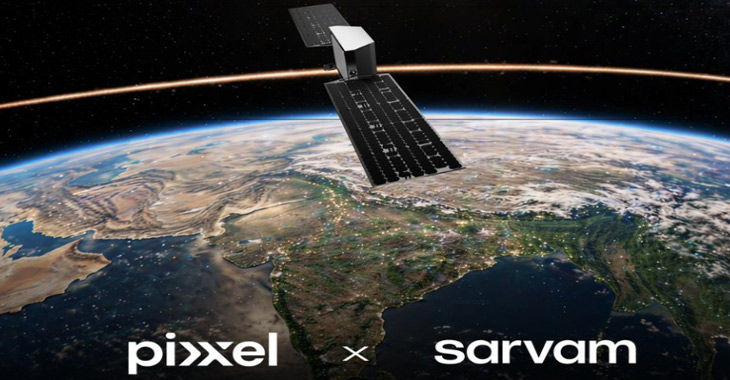
With Pixxel, a space technology firm, partnering with Sarvam, an AI startup, to build the nation’s first such system, it was announced on Monday that India will soon have an AI-operated orbital data center satellite.
Pixxel will be in charge of designing, constructing, launching, and running the Pathfinder satellite after the partnership, and Sarvam will be in charge of the artificial intelligence backbone, which will allow training and inference to take place directly in orbit using full-stack language models, according to the business.
The companies’ efforts to quickly improve space-based computing capabilities are highlighted by The Pathfinder, a 200-kg class satellite anticipated to enter orbit as soon as the fourth quarter of 2026.
The Pathfinder will have datacenter-grade GPUs, comparable to those found in terrestrial AI infrastructure, which will enable high-performance computing in space, unlike traditional satellite systems that use low-power CPUs.
The satellite will also be one of the first in the world to be able to collect high-resolution hyperspectral data and analyze it in orbit utilizing cutting-edge AI models because it will be equipped with Pixxel’s flagship hyperspectral imaging camera.
This would do away with the requirement for sending massive amounts of unprocessed data back to Earth, allowing for real-time analysis, quicker decision-making, and applications in environmental monitoring, resource management, and infrastructure monitoring.
According to Pixxel CEO Awais Ahmed, orbital data centers represent a new frontier because ground-based infrastructure is restricted by issues of land, energy, and scalability. He continued, saying that many of these restrictions may be overcome by space-based computing, which is solar-powered and situated closer to data sources.
The collaboration extends Sarvam’s sovereign AI platform beyond terrestrial systems and into space, allowing AI models produced in India to function independently of international cloud infrastructure, according to CEO Pratyush Kumar.
He stressed the importance of developing indigenous intelligence systems in orbit in order to achieve technological sovereignty.
In addition to evaluating real-time AI inference, power management, thermal behavior, and data workflows in the harsh space environment, the mission will establish the groundwork for upcoming orbital data center systems.
The satellite will be created at Pixxel’s future Gigapixxel plant, which is intended to increase output to 100 satellites.