
India-EU cooperation will be crucial to the New World Order
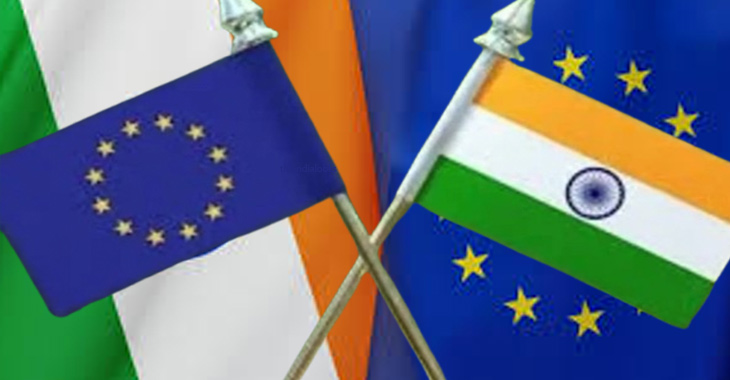
The relationship between India and the United States, which has grown over the last few years, is undergoing a significant transformation under US President Donald Trump‘s second term in office as his administration pursues a more isolationist America First policy.
As a result, the recent rapprochement between India and the EU is seen as essential to bolstering stability in the international order, according to an article.
With India playing a key role in the Indo-Pacific strategy, the Trump administration has made a radical departure from the previous US policy, which sought to contain China.
An essay released on the Robert Schuman Foundation website said that the recent reconciliation between India and the EU is seen as essential to fostering stability in the global order in this climate of geopolitical instability and fragmentation.
With the US President hosting the Pakistani Prime Minister at the White House in July 2025, an event that the Indian Prime Minister saw as a blatant provocation, the US-India relationship has also experienced considerable tension during the last several months.
According to Karine de Vergeron’s article, India had already gained the impression a few months prior that it could not always rely on Washington’s support and, as a result, had to concentrate on its own short- and medium-term strategic interests since the United States had sought to potentially play a mediating role between India and Pakistan.
The same is true for geopolitical and commercial concerns. The Shanghai Cooperation Organization (SCO) summit in late August 2025 marks India’s seven-year return to the organization and, according to the statement, is Prime Minister Narendra Modi’s attempt to respond to the tariffs newly imposed by the US President that year, as well as to India’s approximately $100 billion trade deficit with China in 2025, with a commercial response.
India is consequently now looking for greater cooperation with so-called “middle powers” in order to protect its relationship with the United States. The paper noted that it is reaffirming its pragmatic and case-by-case decision-making strategy, which it has long used in its relationship, particularly with the European Union, by pursuing a multi-aligned geopolitical strategy rather than the more conventional non-alignment policy.
Japan is at the top of the list of India’s most significant strategic middle powers. In reality, Indian officials thought that Prime Minister Modi’s trip to Tokyo at the end of August 2025—the day before the SCO Summit meeting in Tianjin—was far more significant.
From Delhi, Europe is regarded as the world’s greatest concentration of middle powers, which is equally important. According to the piece, Russia, the United Arab Emirates, the United Kingdom, and Canada come after.
The EU is seen as India’s most dependable economic and technological partner, as the FTA’s last negotiations were completed and announced at the 16th EU-India Summit on January 27.
In addition, the agreement is anticipated to more than treble the EU’s goods exports to India by 2032, with tariffs eliminated or lowered to more than 90% of their value, while excluding a number of politically sensitive agricultural commodities on both sides.
The report stated that the trade deal is the biggest that either India or the EU has ever struck, given the size of the rapidly expanding Indian market and that of the EU, and that it will facilitate trade between about a quarter of the world’s population and a quarter of the world’s GDP.
Nevertheless, the article simultaneously observed that despite ongoing trade and strategic disputes between India and the U. S. , the Quad has remained a crucial element of Indo-American relations, as their interests in evaluating the risks posed by China in the Indo-Pacific continue to align.