
Oil drops after Trump hints a delay in Iran
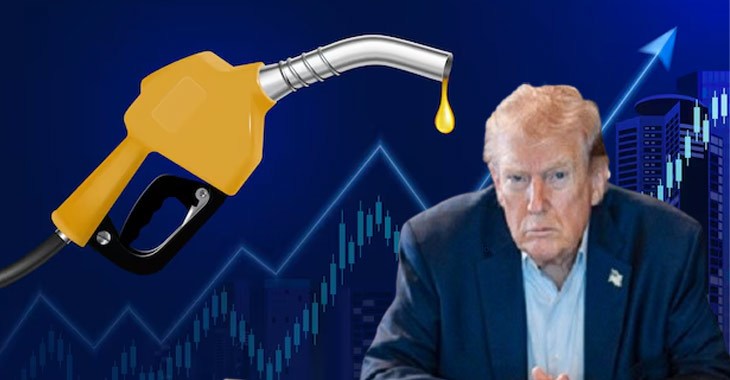
Fears of a wider war in the oil-rich Gulf area subsided as a result of US President Donald Trump‘s announcement that he would halt upcoming military operations against Iran for two weeks.
The Wall Street Journal reported on Tuesday (local time) that US crude futures had dropped below $100 a barrel, reversing recent advances brought about by weeks of escalating tensions surrounding the Strait of Hormuz, a crucial choke point for the global oil trade.
The Journal reported that the drop came after Trump declared that, provided Tehran opens the strait, he would cease hostilities against Iran.
The stock market also responded favorably. It stated that futures connected to the main U. S. indices increased by more than 2%, indicating investor relief following days of crisis-related turbulence.
“After President Trump announced on Truth Social that he would halt hostilities against Iran for two weeks, oil prices are plummeting and stock futures are rising,” the report stated.
The dispute has centered around the Strait of Hormuz, which carries around 20% of the world’s oil. According to accounts from The Hill, Iran had placed limitations on passage for a number of weeks, which increased prices and raised worries about the availability of supplies.
The Journal stated that markets were on edge prior to Trump’s deadline for Iran to reach an agreement, as traders worried that a significant escalation might halt shipments throughout the Gulf and drive prices much higher.
Instead, the prospect of a ceasefire sparked a widespread surge in markets worldwide. Following the news, Asian equities also increased, with the Nikkei in Japan and the Kospi in South Korea both gaining.
For the most part, investors had dismissed Trump’s earlier threats as a bargaining strategy. The newspaper said, “Some investors had bet that Trump could prolong the deadline to reopen the Strait of Hormuz, which he has done several times in the past month. ”
Due to concerns that the strait might be closed or subject to significant restrictions, oil prices had risen in recent weeks. The waterway carries commodities vital to the world’s supply chain, such as liquefied natural gas and crude oil.
Additionally, other asset classes benefited from the reduction in tensions. According to the Journal, gold prices increased as a result of persistent uncertainty, while equities gained as the possibility of imminent warfare diminished.
But analysts warned that the situation is still precarious. The suggested two-week truce is contingent upon Iran consenting to completely reopen the strait and upon both parties refraining from any more escalation.
According to The New York Times, news of missile and drone activity in areas of the Gulf cast doubt on the pause’s long-term viability, even in the wake of the declaration.
For weeks, the energy markets have been impacted by the larger struggle. Price swings and increased volatility in global markets have been caused by restricted shipping access and supply concerns.
Although the two-week window provides an opportunity for diplomacy to restore stability, traders are still cautious about unexpected changes in government or military operations.
One of the most vital energy choke points in the globe is still the Strait of Hormuz. Any disruption can have immediate worldwide effects, especially for major importers.
Continued instability in oil prices might have an impact on inflation, exchange rate stability, and overall economic development in India, which is highly dependent on crude imports from the Gulf.