
India-EU trade agreement to increase investor trust in the services industry
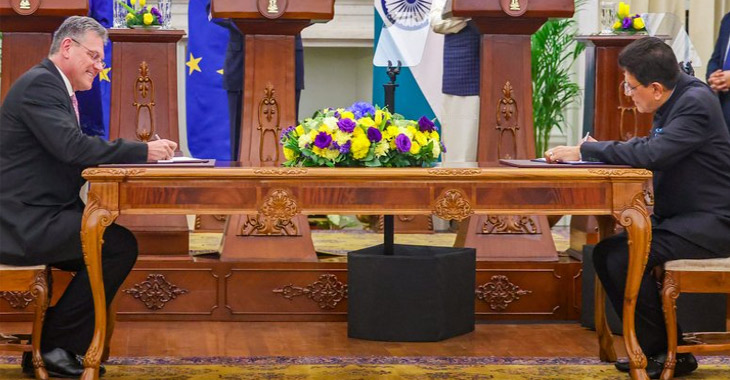
The IT industry’s top body, Nasscom, stated on Tuesday that the India-EU trade agreement supports job creation, MSME growth in the tech sector, and overall confidence for investors in India’s services sector by strengthening bilateral trade and economic ties.
Dedicated SME chapters with digital platforms and contact information are part of the FTA.
According to Nasscom, the FTA gives Indian IT exporters a hedge against the unpredictability of international trade by diversifying their markets in light of geopolitical risks.
It improves India’s standing in international digital service value chains. In order to better comprehend the operationalization of the FTA clause, we shall wait for the comprehensive draft text,” it continued.
Services benefit more from expanding markets and rule-based predictability than products do from significant tariff reductions.
The benefits would come in the form of improved EU market access for Indian technology, as services are a significant and rapidly expanding sector of both economies.
According to Nasscom, this might reduce non-tariff obstacles and facilitate cross-border deliveries.
“Digital trade regulations that promote business while safeguarding security, privacy, and public policy.” More prospects in Europe, such as simpler cross-border service delivery (Mode 1 under GATS) and possibly better professional mobility (via Mode 4), will benefit Indian IT companies, it said.
In order to facilitate Social Security Agreements with all EU member states within five years, India and the EU have reached a cooperative framework.
Building on the India-EU Trade and Technology Council, the agreement promotes closer cooperation between the EU and India in the fields of technology, innovation, and digitalization.
Increased EU investment in India’s IT sector, joint ventures, AI, semiconductor, clean tech, and startup R&D could result from this. According to Nasscom, technology transfer, co-creation, and increased alliances could be advantageous to Indian IT enterprises.
In particular, the trade agreement empowers labor-intensive industries, MSMEs, women entrepreneurs, craftsmen, and youth—key focal areas of the government’s inclusive growth agenda—by providing Indian exporters with unprecedented market access for a wide range of goods and services.