President Murmu to Honour India’s Cleanest Cities at Swachh Awards
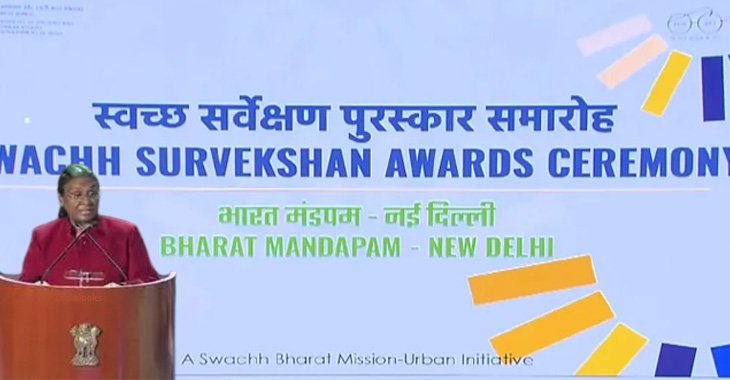
President Droupadi Murmu will confer awards across various categories at the 10th edition of ‘Swachh Survekshan’ to recognise the cleanest cities in the country, an official statement said on Monday.
The Department of Urban Development under the Ministry of Housing and Urban Affairs (MoHUA) will organise the ‘Swachh Survekshan (SS) Awards 2025-26’ to recognise India’s cleanest cities and celebrate their contributions to the Swachh Bharat Mission-Urban.
President Murmu will present the awards at Vigyan Bhawan in the presence of Union Minister Manohar Lal and Tokhan Sahu, Minister of State for Housing and Urban Affairs.
This year’s awards will also recognise top performers under the ‘Swachh Shehar Jodi’ initiative, which promotes peer learning between 70 mentor cities and 191 mentee cities across 33 States and Union Territories to improve urban waste management.
Manohar Lal launched the ‘Swachh Shehar Jodi’ initiative on September 27, 2025, as India’s first urban waste management mentorship and peer-learning programme.
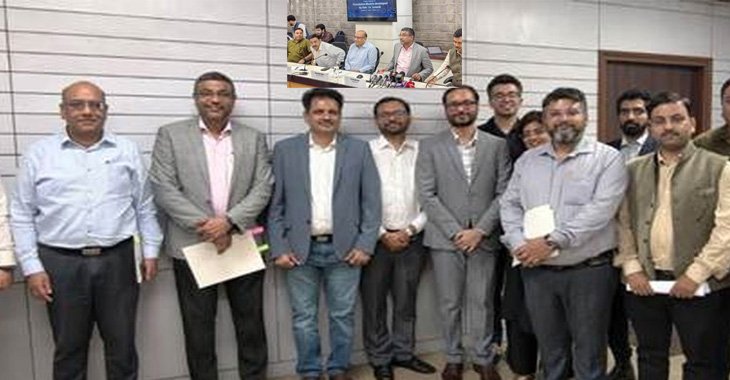
During the launch event, representatives of the mentor and mentee cities signed a memorandum of understanding (MoU) to formally begin the initiative.
“The SS 2025-26 awards serve as a celebration of the collective achievements of cities and States in the past decade and a renewed commitment to sustain on-ground achievements,” the official statement said.
Since its launch in 2016, ‘Swachh Survekshan’ has expanded its coverage from 73 urban local bodies (ULBs) to more than 4,751 cities in its latest edition.
The 10th edition introduces several key improvements, including greater emphasis on citizen feedback and wider coverage of urban riverfronts, coastlines and water bodies. It also includes specific indicators to assess efforts to prevent open defecation and urination, maintain cleanliness at tourist and heritage sites, and promote behavioural change initiatives in schools.
For the 10th edition, authorities evaluated ULBs against 43 indicators across 10 key assessment areas.
More than 3,000 trained assessors conducted extensive on-ground evaluations across the country and used real-time GPS-enabled monitoring to track the assessment process.
The authorities also managed the entire assessment digitally, from evidence submission to verification, to ensure transparency and maintain rigorous quality checks at every stage, the statement added.