India’s first hydrogen train: carbon-free and smoke-free
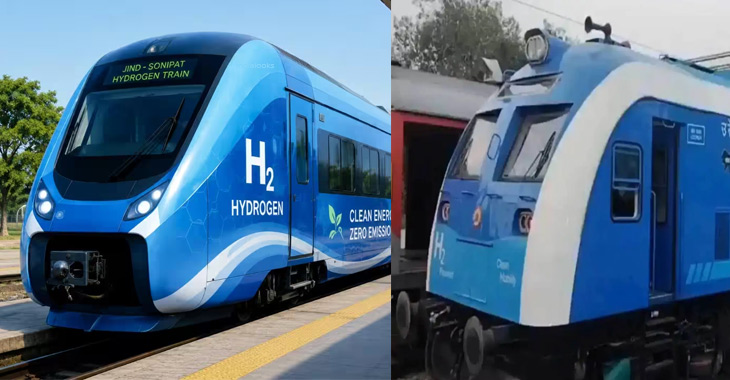
In a historic move that signals a turning point in the nation’s train mobility and provides a major boost to clean transportation, Prime Minister Narendra Modi will flag off India’s first hydrogen train from Jind, Haryana, on July 17.
Several firsts are among the many benefits of the cutting-edge Hydrogen train: no smoke, no carbon emissions, operation on clean hydrogen fuel, and water vapor as its only byproduct emission. Before its official release, it has been established as a major subject of national conversation because of these unique selling factors.
In addition to starting a thrilling new chapter in the nation’s green energy transition, the Hydrogen-powered train running between Jind and Sonipat in Haryana is a pilot project that will usher in a new era of rail travel.
The hydrogen train is powered by a 1200 kW hydrogen fuel cell propulsion system and only emits water vapour, making it a sustainable, clean, and green option. It is the world’s most powerful hydrogen train, with 3200 horsepower.
India is about to make a huge leap forward in achieving cleaner and greener rail travels as well as furthering environmentally sustainable transportation and zero-carbon emission goals with the introduction of its first Hydrogen train.
Since the train has been developed and designed locally and is supported by Jind’s indigenous hydrogen storage and refuelling infrastructure, it will also be a major asset to the Aatmanirbhar Bharat Mission.
Acknowledging the significant achievement in the history of Railways, Union Minister for Petroleum and Natural Gas Hardeep Singh Puri declared that India has become a member of an exclusive club of countries, along with Germany, Japan, China, and the United States, that are examining hydrogen fuel cell technology for environmentally friendly rail operations.
The first hydrogen train in India can hold 2,600 people. Scheduled to start its journey from Jind on Friday, it promises to revolutionize Indian Railways‘ operations, enhance passenger travel experiences, and advance the ‘Viksit Bharat’ vision.