

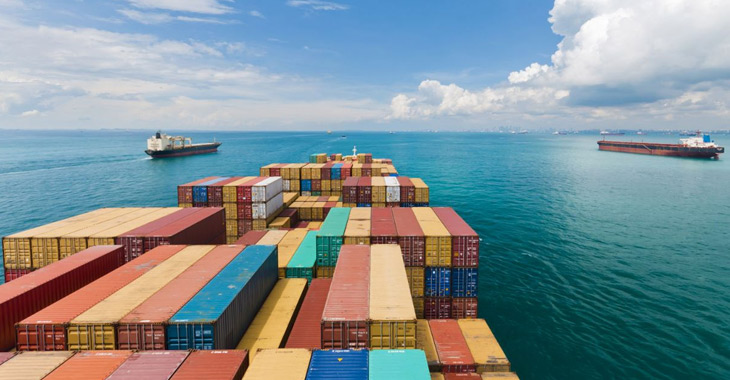

Four cargo ships are currently en route to Indian ports from the Persian Gulf carrying important cargoes of urea, di-ammonium phosphate (DAP), and sulphur after successfully navigating the Strait of Hormuz last week.
These ships are now traveling toward their assigned destination ports—Krishnapatnam, Kakinada, Paradeep, and Mundra—in the face of ongoing worldwide trade difficulties. Upon arrival, the fresh imports will be offloaded right away to bolster the country’s present fertiliser buffer and guarantee that agriculture can continue to operate, according to the release.
According to statistics from June 22nd, India’s total fertilizer stock position is at 196. 08 lakh tons, a healthy increase from the 168. 67 lakh tons reported at the same time last year. The statement said that this strong inventory backup includes 81. 44 lakh tons of urea, 20. 92 lakh tons of DAP, 55. 91 lakh tons of NPK, 12. 68 lakh tons of MOP, and 25. 13 lakh tons of SSP.
Following the Middle East crisis, total fertilizer sales from March 1, 2026, to June 21, 2026, increased by 13. 2 lakh tonnes, reaching 153. 4 lakh tonnes, demonstrating the high agricultural momentum compared to the 140. 2 lakh tonnes sold during the same period last year.
The government boosted domestic manufacturing capabilities in tandem with targeted import deliveries in order to safeguard Indian farmers from unanticipated global market shocks. In order to reach an amazing 133. 12 LMT, domestic output increased considerably after the crisis. According to the report, this robust local base has been closely matched by complete import arrivals reaching 43. 69 LMT at Indian ports during this period, striking a perfect balance between local output and international procurement.
According to its most recent global tender analysis, India has effectively signed contracts for 17. 70 LMT of urea. India has now safely purchased more than 90 LMT of Urea and P&K fertilisers from the global market, specifically for the current kharif season, thanks to this most recent addition.
According to the release, this big-scale purchase plan was made possible by active diplomatic collaboration with 28 Indian Missions overseas, which established a variety of import channels across numerous international routes.
Oman, Malaysia, Vietnam, Georgia, Nigeria, Russia, Finland, Egypt, Algeria, Turkey, and the Netherlands have all provided urea.
The Red Sea shipping route from Russia, Morocco, Egypt, the USA, Jordan, South Korea, Tunisia, and Saudi Arabia has secured the DAP and NPK streams, the statement continued.