

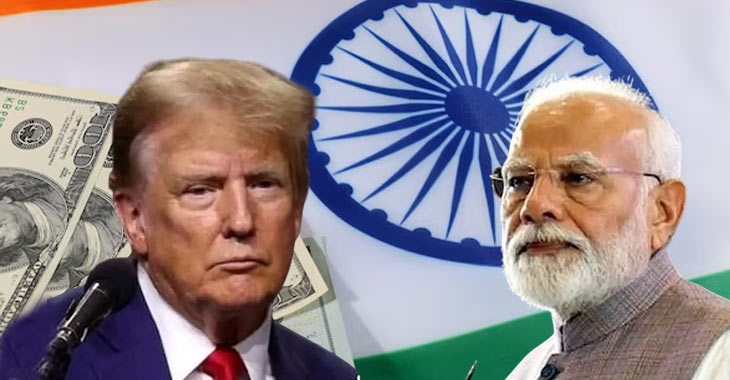

Citing India’s ongoing purchases of Russian oil, US President Donald Trump declared on Wednesday that he had signed an executive order imposing an additional 25% tariff on imports from the country.
The decision, according to the White House, is intended to reinforce actions taken against Russia in response to its activities in Ukraine under previous sanctions. Last week, the US president declared a 25% tariff on India.
According to the order, India is receiving oil from Russia either directly or indirectly, which the US views as a danger to its foreign policy and national security.
“Accordingly, and as consistent with applicable law, articles of India imported into the customs territory of the United States shall be subject to an additional ad valorem rate of duty of 25 per cent,” the order states.
All qualifying Indian goods entering the US would be subject to the additional duties 21 days after the order is signed, with the exception of shipments that are already in route and cleared before September 17.
“Subject to section 3 of this order, this rate of duty shall be effective with respect to goods entered for consumption, or withdrawn from warehouse for consumption, on or after 12.01 a.m. Eastern Daylight Time 21 days after the date of this order, except for goods that (1) were loaded onto a vessel at the port of loading and in transit on the final mode of transit prior to entry into the United States before 12.01 a.m. Eastern Daylight Time 21 days after the date of this order; and (2) are entered for consumption, or withdrawn from warehouse for consumption, before 12.01 a.m. Eastern Daylight Time on September 17,” the order that was added.
Unless the items are exempt, such as in certain categories specified in previous trade executive orders, these charges will be in addition to current tariffs.
Additionally, goods covered by this order must adhere to stringent customs regulations, such as being granted “privileged foreign status” for entry into US foreign trade zones.
Trump still retains the power to change the order in response to evolving events, retaliation from impacted nations, or notable changes in Russian or Indian policy.
The directive also instructs the US Treasury, State, Commerce, and other departments to keep an eye on the oil trade between Russia and other nations and, if need, suggest comparable measures.