

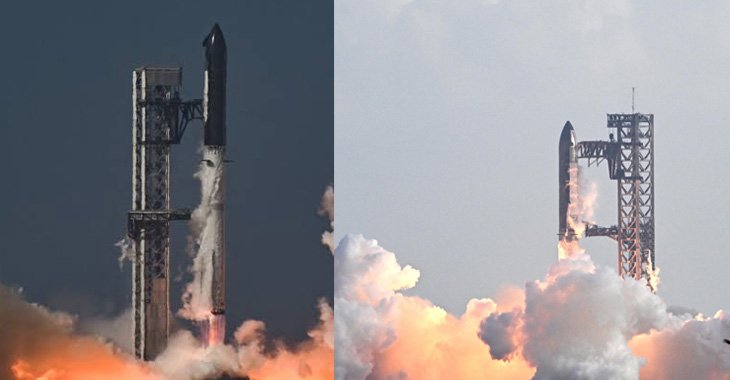

Elon Musk-backed SpaceX is set to launch its Starship rocket on its 14th test flight as early as Monday, with the mission marking the spacecraft’s first attempt at an orbital flight.
SpaceX said on X that the 75-minute launch window would open at 7:15 a.m., subject to regulatory approval. The company plans to livestream the launch on its official website, with coverage expected to begin about 30 minutes before liftoff.
The mission aims to take Starship to an altitude of around 275 km, complete roughly six orbits and remain in flight for nearly 10 hours before making a targeted splashdown in the Pacific Ocean west of Chile.
After stage separation, Starship’s upper stage is expected to deploy 26 next-generation Starlink V3 satellites. SpaceX says the satellites could add around 26 terabits per second of capacity to its satellite constellation, roughly 10 times the capacity delivered by a standard Falcon 9 launch.
Once it deploys the satellites, Starship will perform an in-space deorbit burn using a single Raptor engine before attempting a controlled re-entry and splashdown.
The mission will also test several critical phases of the Super Heavy booster, including liftoff, stage separation and the final landing burn ahead of a planned offshore splashdown in the Gulf of Mexico.
SpaceX has introduced hardware and software upgrades for the flight after ice-related engine failures cut short the boostback maneuver during Flight 13.
The company has also modified Starship’s heat shield, introducing sturdier tile mountings, curved tile designs and improved plasma shielding, according to reports.
Ship 41 will carry two recycled heat-shield tiles from Ship 40, giving SpaceX an early opportunity to test the reusability of Starship’s thermal protection system.