

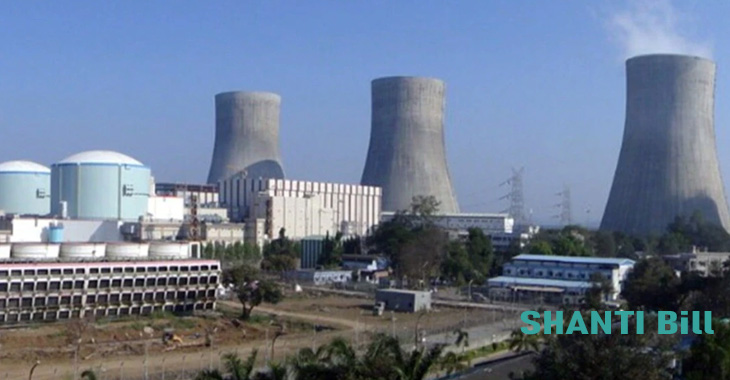

The Sustainable Harnessing and Advancement of Nuclear Energy for Transforming India (SHANTI) Bill, 2025 is a positive move towards enhancing India’s nuclear energy ecosystem and improving project implementation.
According to Infomerics Ratings, the legislation is a long-term structural benefit for the Indian power industry because it addresses persistent barriers to the expansion of nuclear capacity, notably liability and participation restrictions.
Considering projects under development and planning, the corporation anticipates that the nuclear growth will continue to be slow and reach about 22 GW by FY2032.
The ‘SHANTI Bill 2025’ establishes a single legal framework that regulates nuclear liability, development, safety, security, and safeguards, replacing the Atomic Energy Act of 1962 and the Civil Liability for Nuclear Damage Act of 2010.
According to the legislation, the central government may specifically allow government agencies, businesses, partnerships, or other individuals to manufacture nuclear fuel, including conversion, as well as construct, own, run, or decommission nuclear power facilities.
Nuclear is a key component of India’s future energy mix due to its net-zero commitments and increasing electricity demand, the business said, as renewable intermittency restricts its capacity to completely satisfy reliable base load demand even with storage assistance.
Rohit Inamdar, Chief Ratings Officer at Infomerics Ratings, stated, “The bill establishes category wise operator liability caps and restricts recourse to suppliers to defined contractual and intentional fault situations, thereby reducing supplier risk, improving investor confidence, and facilitating greater private sector participation in future nuclear projects. ”
However, the report also stated that the expansion of nuclear power capabilities will depend on tariff competitiveness and the creation of a domestic vendor ecosystem.
As nuclear capacity grows, the company stressed that long-term, sovereign-backed fuel supply agreements, the creation of strategic reserves, and the development of domestic fuel cycle infrastructure would continue to be essential.