

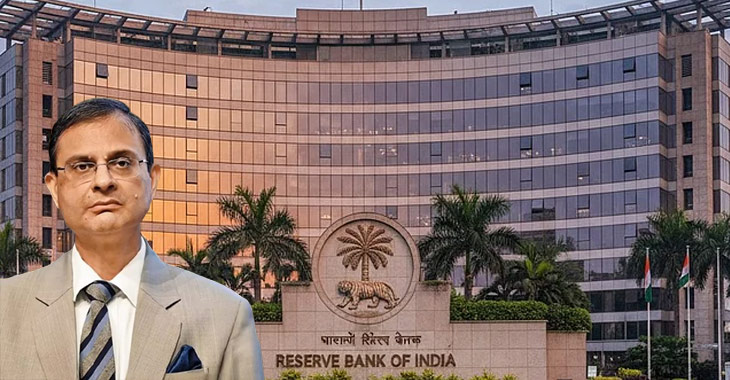

The RBI hopes of a minor rate reduction of 25 basis points (bps), which were building up until a few days ago, seem to have diminished as detailed evaluations of the strong Q2 growth results and the changing strategy suggest that a pause in the December policy meeting is more likely, as indicated by an SBI Research report released on Sunday.
A noticeable pattern emerging from the monetary actions of Central Banks globally is that monetary policy has entered a phase of stasis, varying across different regions.
While rate cuts still dominate the decisions being made, the overall frequency of such decisions is significantly reduced.
Nonetheless, equity markets around the world are leaning towards irrational behavior, whereas the NIFTY 500 appears to be more accurately represented, the report further highlights.
“It is crucial to persist with proactive measures outside of policy adjustments. It’s vital to shift market perceptions as the G-Sec market is becoming increasingly misaligned, illustrated by the widening gap between the overnight repo rate and the 10-year G-Sec yield, which has expanded from 40-50 bps to 100-110 bps, despite a total rate cut of 100 bps and CRR reductions disrupting the transmission of monetary policy,” said the report in anticipation of the Monetary Policy Committee meeting in the first week of December.
Promoting broad-based growth without any rate reductions might require the introduction of a “neutral regime,” equivalent to “calibrated easing,” which would focus on managing yields and liquidity concurrently, the report indicates.
The RBI needs to engage with the market, clearly differentiating between temporary and permanent liquidity injections or withdrawals when the market conditions or sentiments justify such measures.
This distinction will facilitate the coexistence of short-term liquidity strategies alongside long-term measures without disrupting the fundamental framework.
Additionally, it will pave the way for a more efficient market characterized by reduced noise and greater rationality, the SBI report notes.
It suggests that the RBI must ensure “calibrated easing” within a “neutral stance” through liquidity initiatives to create a stabilizing effect on yields.
This would involve: implementing durable liquidity operations such as open market operations (OMO) or other methods aligned with the Revised Liquidity Management Framework. Distributing the OMO Calendar across the yield curve for liquidity control and rate transmission would be beneficial.
To ensure comprehensive transmission of the 100 bps rate cut, OMO purchase auctions may be arranged to maintain durable liquidity at 2-2.5 percent of NDTL.
To normalize the disparity between Government Securities (G-Secs) and State Development Loans (SDLs), which has widened, SDLs could be incorporated into the Durable Liquidity operations, the report suggests.
To enhance market sentiment and stabilize long-term yields, the RBI might contemplate a liquidity-neutral Operation Twist involving G-Secs and SDLs to lessen fluctuations and restore steadiness in the yield curve, according to the SBI report.