

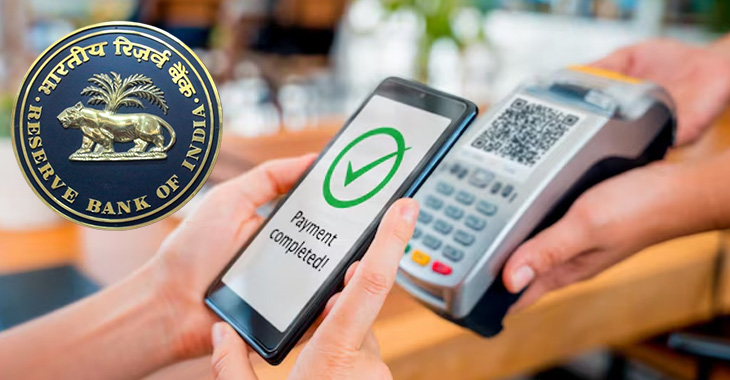

With the implementation of new laws for online transactions by the Reserve Bank of India (RBI), digital payments in India are expected to become somewhat more secure, but also a little bit more time-consuming, starting on April 1, 2026.
All digital payments, including those made using mobile wallets, credit cards, debit cards, and UPI, must now employ two-factor authentication (2FA), according to the central bank.
This indicates that an OTP alone will no longer be enough to finish a transaction. In addition to OTP, users will now need to complete at least two levels of authentication, such as a PIN, password, biometric verification, or token.
The action is taken in response to an increase in internet fraud incidents, such as phishing and SIM swap schemes, for which OTP-based systems have been shown to be susceptible.
The RBI hopes to increase confidence in digital payment systems and lower the risk of unlawful transactions by introducing an additional level of protection.
The shift means that users may have to wait a little longer for payments to process, particularly on new devices or for large purchases.
Regular transactions on trusted devices, though, are likely to continue to run quite smoothly.
Additionally, the system will use a risk-based strategy, in which the frequency of security checks will vary according to the transaction’s characteristics and activity.
Increased accountability for banks and payment systems is another important aspect of the new regulations.
Financial firms could be compelled to reimburse consumers if fraud results from a deficiency in their systems.
This is anticipated to speed up the process of addressing grievances and compel banks to improve their security infrastructure.
Similar authentication standards, including cross-border card transactions, will be applied to international transactions as well, according to the RBI.
By October 2026, these regulations are expected to be completely implemented.
The central bank’s most recent action is intended to strike a balance between convenience and security as digital payments become more and more popular in the nation.
Although the additional verification procedure may appear to be a little inconvenience, experts predicted that it will greatly lower the risk of fraud and increase the security of daily transactions for millions of users.