

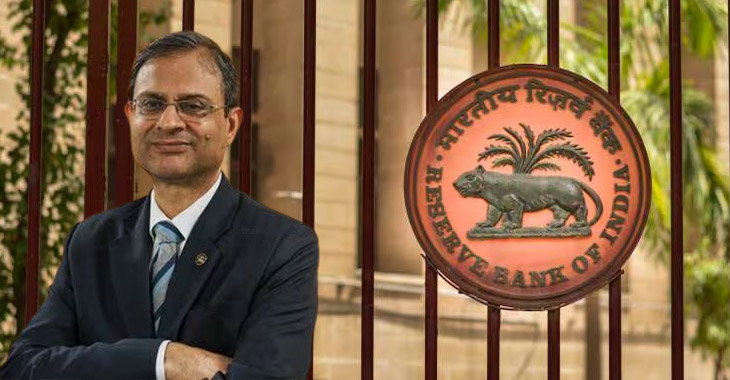

In light of the ongoing developments in West Asia, the Reserve Bank of India (RBI) is likely to hold off on making any changes at the next monetary policy committee (MPC) meeting next week (April 6-8), according to SBI Report.
The RBI would be far more cautious in expressing its stance, being the first policy since the beginning of the US-Israel and Iran war.
According to the study, the Central Bank has to “concomitantly explore the probability of conducting Operation Twist,” which raises the short-term yield while calming the yield on long-term papers and ensuring that various reference rates remain within the prescribed bands, in line with the policy rate in a measured manner, all while tackling the balance of payment deficit through carefully thought-out measures.
The entire planet has been thrown into disarray by a war in West Asia that has been ongoing since the previous policy.
According to the International Energy Agency (IEA), the de facto closure of the Strait of Hormuz and the damage to regional infrastructure have caused the worst disturbance to the world oil market in its history since 1973.
“Clearly, India is experiencing the rising temperatures and is not unaffected by the present crisis. Crude oil prices are stubbornly over $100 per barrel, and the rupee is already trading at over 93 per dollar, which has caused imported inflation to rise in many states. “In addition to the projection of ‘Super El Nino’, this may also raise inflationary pressures,” stated Dr. Soumya Kanti Ghosh, Group Chief Economic Advisor for the State Bank of India.
The RBI has made a number of announcements aimed at controlling speculation in both the onshore and offshore NDF markets, concerned about the increase in the rupee’s gravitational pull during the ongoing conflict.
Nonetheless, certain norms might provide practical difficulties for banks.
The report noted that the current CPI trajectory may point to inflation of more than 4. 5% for the next three quarters, even if the projections for FY27 are far below the RBI’s target range.
Nevertheless, Dr. Ghosh said, “the government’s recent choice for full customs duty exemption on a wide range of critical petrochemical products until June 30, 2026 may lower input costs and hence may have benign impact on imported inflation. ”
Given the current volatility in rupee and yield, the SBI economist said, “we believe the liquidity should be modulated to ensure rupee also gets support”.