

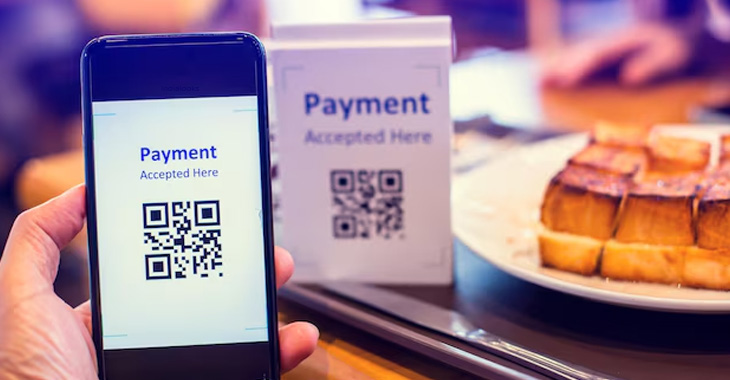

Todd McClay, New Zealand’s Minister of Trade and Investment, said that as the Unified Payments Interface (UPI) grows its global presence, his country is prepared to enjoy the digital payment flexibility offered by India’s unique and locally created QR-based system.
The minister emphasized that New Zealand is an extremely open economy and that one must abide by the rules that the country has established, and that “I don’t think that will be such a challenge. ”
New Zealand is a great place for UPI. In the end, digital infrastructure is essential. Our economy is undergoing a makeover. McClay stated that the FTA with India makes it simpler and provides more certainty, and that “we are really open to the world. ”
He also mentioned that as New Zealand prepares to invest in India, these are some of the discussions you will witness between businesses. India will also be looking to make investments in New Zealand.
Prime Minister Narendra Modi arrived in Auckland for a two-day visit to New Zealand for the final leg of his three-nation visit, and in a special gesture, his counterpart, Christopher Luxon, welcomed him at the airport.
This week, PM Modi said that India’s UPI will be integrated with Indonesia’s payment system, allowing travelers and businesses to make cross-border retail payments with ease by using their domestic payment apps.
PM Modi stated at a joint news conference with Indonesian President Prabowo Subianto in Jakarta: We are pleased that India’s UPI will soon be integrated with Indonesia’s payment system. The convenience of conducting business and traveling will increase as a result.
In Greece, UPI also became operational late last month, enabling eligible consumers to transfer money instantly, safely, and effortlessly, with a significant reduction in transaction fees.
With nearly 49% of the world’s real-time payment transaction volume, UPI is now the largest real-time payment system worldwide. In almost nine nations, it is currently formally recognized and live for cross-border remittances and merchant payments.