

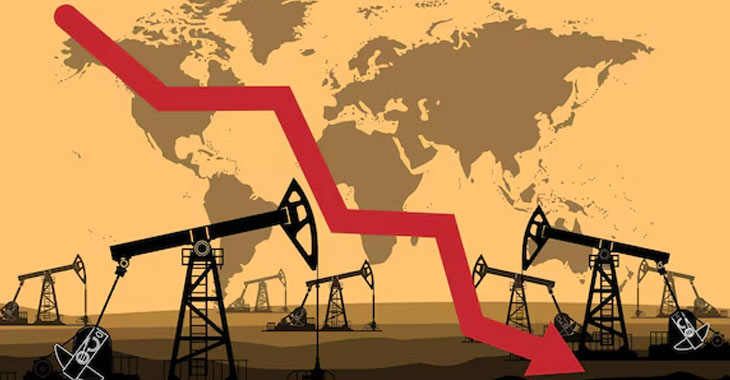

After Iran stated that it was not in direct talks with the US about ending the war, global oil prices soared to over $100 a barrel on Thursday.
As tensions in the Middle East continued to rise, US West Texas Intermediate (WTI) crude increased by 1. 35 percent to $91. 54 per barrel, while Brent crude futures increased by 1. 21 percent to $103. 46 per barrel.
Abbas Araghchi, Iran’s foreign minister, stated that communications between Tehran and Washington through intermediaries should not be construed as talks. An American-supported ceasefire plan would probably have been turned down by Tehran as well.
Earlier, in the midst of rising expectations of a ceasefire in the West Asia area, global crude oil prices saw a dramatic fall on Wednesday.
Even if technical indicators indicate that important support levels are being tested, recent changes in crude oil prices may provide some respite for India’s macroeconomic indicators, such as inflation and the Current Account Deficit (CAD), according to experts.
In India, a $10 per barrel change in the price of oil typically affects the CAD by 0. 3–0. 5 percentage points of the GDP and increases CPI inflation by 20–30 basis points, depending on the pass-through.
In the meanwhile, Iran has stated that it will not impose restrictions on ships from five friendly nations, including India, allowing them to transit the strategically important Strait of Hormuz, even though access is still restricted for others.
Despite the ongoing conflict in the area, ships from India, Russia, China, Pakistan, and Iraq have been given safe passage through the crucial maritime chokepoint.
Additionally, he said that ships belonging to nations deemed rivals or those engaged in the current war would be denied passage. He stated that ships belonging to the United States, Israel, and some Gulf states that are involved in the present crisis will not be allowed to pass through the straits.