

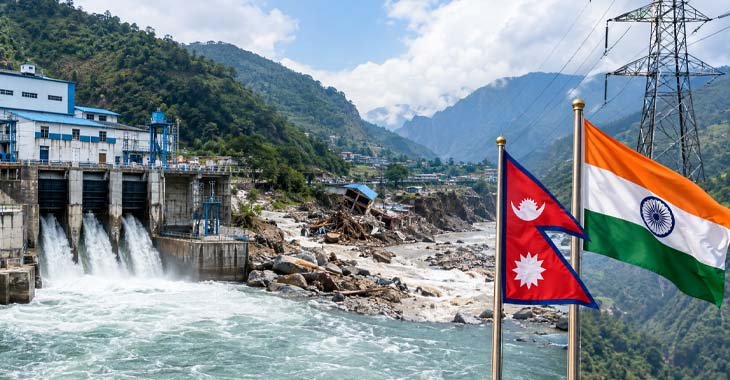

The flash flood that tore through the Lhende Khola, Bhotekoshi and Trishuli rivers on August 26 damaged hydropower plants across Nepal. The damage forced the Himalayan country, once an electricity exporter, to depend on India as it faced an acute power crisis, according to a new report.
India’s Ministry of Power has approved exports of up to 654 megawatts to the Nepal Electricity Authority from September 13 through December 31. India will supply the power for 18 hours a day, from midnight to 6 pm. The supply will help Nepal keep hospitals, cold stores and water pumps running and meet evening peak demand, preventing the power crisis from worsening, according to an article in India Narrative.
Several damaged or isolated power plants prompted Nepal to seek help from India. India approved the request earlier than the usual October window for winter imports because Nepal needed immediate operational support.
India approved the power flow even as its own September demand reached unusually high levels, with peak load nearing 269 GW and non-solar hours still facing shortages. El Nino conditions and a patchy monsoon also reduced India’s hydro and wind power output, the article states.
The government’s rapid assessment estimated physical damage to Nepal’s energy sector from the flash floods at Rs 134.69 billion (Nepalese rupee). It expects the cost of restoring power generation and the grid to rise much higher.
Hundreds of hydropower workers remain missing. The rivers that once supported Nepal’s electricity exports instead unleashed a destructive wall of ice, rock and water on the morning of the disaster, the article says.
Devighat and the original Trishuli station hold particular significance in Nepal’s hydropower history. India provided grant assistance to build both plants. Nepal developed Trishuli under the 1958 agreement and commissioned it in the late 1960s.
It added Devighat as a cascade in the mid-1980s, along with smaller projects such as Phewa and the Kataiya house on the Koshi canal.
Nepal first entered the Indian Energy Exchange as a seller in November 2021. At the time, India approved the export of the first 39 MW from those same two stations. Electricity that India once supplied as aid eventually became a traded commodity.
This month, however, electricity is flowing in the opposite direction along the same network of transmission lines because the rivers that powered those plants have severely damaged them.
The response after August 26 involved more than electricity supplies. An Indian Air Force flight left Hindon on the same evening the flood struck, following a call between the two prime ministers.
The aircraft carried about 10 tonnes of shelters, blankets, hygiene kits, lamps and medicines. India followed up with additional sorties and consignments, sending tens of tonnes of relief material.
India also sent tunnel-rescue specialists to work with the Nepali Army on blocked hydropower sites, forensic teams to help identify victims, and equipment for modular and Bailey bridges after the floods destroyed sections of roads, the article states.
“Other countries sent help too; gratitude is not a scarce resource and should not be monopolised. But the first response is a habit, and habits show.
In April 2015, after the Gorkha earthquake, that habit had a name — Operation Maitri — and it arrived within hours: NDRF teams, aircraft, field hospitals, and later a reconstruction pledge that included houses in Gorkha and Nuwakot, schools and heritage sites.
After Jajarkot in 2023 and the September 2024 rains, the pattern was smaller but the same: material on the ground before the condolence statements had cooled. None of these erases the harder chapters of the relationship. It does describe what happens when the ground moves,” the article further states.