

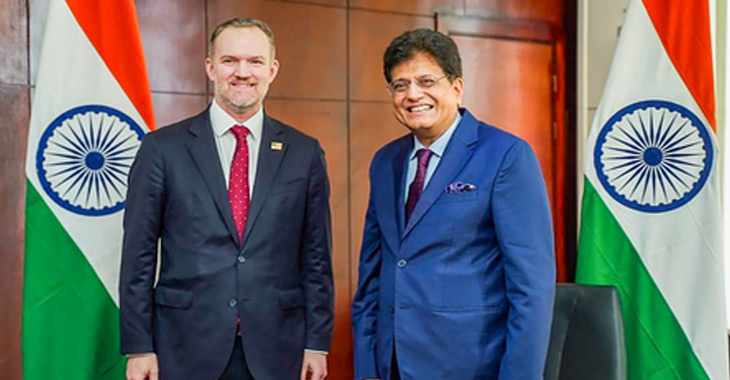

Union Commerce and Industry Minister Piyush Goyal said on Sunday that India and the United States will have ministerial-level trade discussions this week as they both work to finalize the framework for the first phase of the proposed bilateral trade agreement (BTA) before a crucial tariff deadline next month.
Here for a two-day visit, Jamieson Greer, the US Trade Representative, is expected to meet Goyal.
My colleague is visiting Delhi tomorrow to discuss the trade deal with the United States, the minister informed reporters.
Rajesh Agrawal, the Secretary of Commerce, had previously stated that the talks between the two ministers are likely to concentrate on putting the finishing touches on the framework agreement while simultaneously furthering negotiations on the broader bilateral trade pact.
Earlier this month, Goyal stated that India and the United States were nearing the end of their interim trade deal’s unresolved issues and voiced optimism that the BTA’s first phase might be finished by the middle of the next month.
Because the United States’ 10% temporary tariff on all of its trading partners will expire on July 24, the approaching conversations take on importance.
The United States administration announced in February that the interim charge will be applied on top of the Most Favoured Nation (MFN) duty rates. Once the 150-day period has passed, Washington is anticipated to implement a new tariff system.
After chief negotiator-level meetings between the two nations were conducted in the nation’s capital from June 2 to June 4 to move negotiations forward on the suggested pact, the meeting takes place.
In addition, the U. S. Trade Act of 1974’s Section 301 is the subject of ongoing investigations by the Office of the U. S. Trade Representative (USTR) against a number of countries, including India, concerning issues with excessive industrial capacity and labor practices in international supply chains.
In June, the USTR recommended imposing new tariffs on goods from a number of countries, including India, due to worries about forced labor in supply chains. The proposal is still being discussed and has not yet been accepted.
The ministerial engagement this week is anticipated to give trade negotiations new impetus and aid in bringing the two sides closer to completing the proposed agreement’s first tranche.