

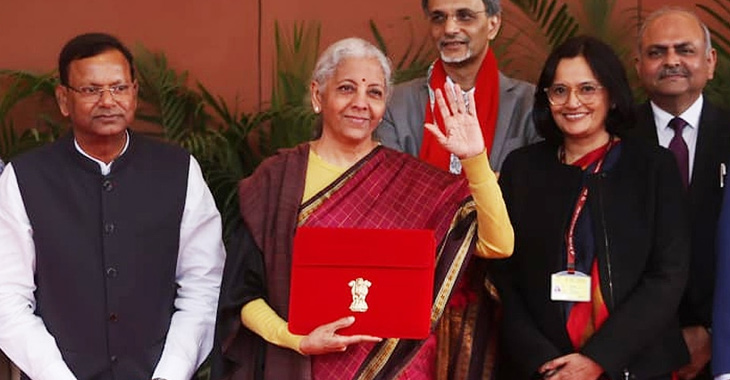

The Union Budget 2026–27 presents a robust and credible blueprint to strengthen India’s competitiveness through fiscal discipline, structural reforms and targeted measures aimed at increasing private investment, business groups said on Sunday.
CII Punjab Chairman Amin Jain said the Budget features numerous major initiatives for the textile sector.
“These include the redevelopment of heritage textile parks, integrated plans for labor-intensive textile segments, and the development of mega textile parks, which he said will provide a significant boost to the domestic textile industry,” Jain continued.
Noting that the majority of MSMEs in the nation are in the textile industry, he also applauded the creation of a Rs 10,000 crore MSME fund.
According to Jain, “the new fund is expected to benefit the entire sector.”
The Budget, according to Naresh Pachisia, President of the India Chambers of Commerce, is well-balanced and would help sustain economic growth at about 7%.
He noted that in order to ensure widespread development, the Finance Minister has established targeted plans across industries.
Pachisia said that in order to limit inflation, the government has upheld strict fiscal restraint.
According to Pachisia, “the fiscal deficit for the current financial year has been pegged at 4.4%, with a target of 4.3% for the next fiscal year, which provides greater resilience against global economic volatility.”
The Budget is a positive move, according to Mukul Bagla, Chairman of PHDCCI’s Direct Tax Committee.
He stated that the present fiscal deficit of 4.4% is intended to be gradually reduced to 4%.
Bagla went on to say that although the previous budget had a number of tax relief measures, the new budget places a greater emphasis on stability.
The government has proposed a number of customs reforms, which is encouraging, according to Ashok Batra, Chairman of PHDCCI’s Indirect Tax Committee.
However, he added that similar reforms were also expected in the GST framework.