



Twenty20 International cricket is one of the most exciting formats of the game, where batters have limited time to build an innings and must score runs quickly to give their teams a competitive advantage.
Unlike Test cricket and One-Day Internationals, T20Is reward aggressive stroke play, innovative shot-making, and the ability to dominate bowlers from the very first delivery. Among the most spectacular achievements in this format is scoring a century in fewer than 40 balls.
A T20I century is a remarkable accomplishment in itself, but reaching 100 runs in just 27, 29, or 30 deliveries places a batter in an extraordinary category. Such performances require exceptional timing, power, confidence, and an almost perfect understanding of the match situation.
As of October 2026, Estonia’s Sahil Chauhan holds the record for the fastest century in men’s T20 International cricket, having reached his hundred in only 27 balls against Cyprus in June 2024. Turkey’s Muhammad Fahad follows with a 29-ball century, while India’s Abhishek Sharma has climbed to third place with his explosive 30-ball hundred against Afghanistan in September 2026. Three other batters—Jan Nicol Loftie-Eaton, Sikandar Raza, and Finn Allen—have also scored T20I centuries in just 33 deliveries. Source: Guinness World Records and published T20I statistics.
This article explores the fastest centuries in men’s T20I cricket, highlighting the batters, their innings, the records they established, and the significance of their performances.
The following table covers the five fastest century records by delivery count, including all three batters tied on 33 balls. As a result, the list contains six innings across five ranked positions.
Rank Player Team Balls to 100 Opposition Year
1 Sahil Chauhan Estonia 27 Cyprus 2024
2 Muhammad Fahad Turkey 29 Bulgaria 2025
3 Abhishek Sharma India 30 Afghanistan 2026
4 (tie) Jan Nicol Loftie-Eaton Namibia 33 Nepal 2024
4 (tie) Sikandar Raza Zimbabwe 33 Gambia 2024
4 (tie) Finn Allen New Zealand 33 South Africa 2026
Note: The rankings are based on the number of balls required to reach 100 runs, not the total number of deliveries faced in the completed innings. Players who achieved the milestone in the same number of balls share the same rank. Source: T20I fastest-hundred records.
1. Sahil Chauhan – 27-Ball Century for Estonia Against Cyprus
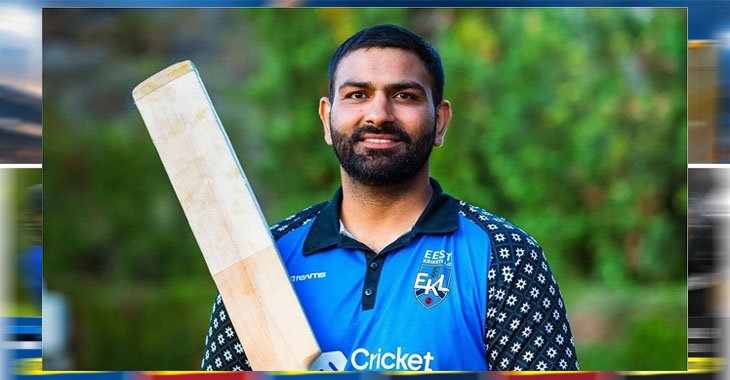
Final score: 144 not out off 41 balls
Date: 17 June 2024
Venue: Happy Valley Ground, Episkopi, Cyprus
Sahil Chauhan occupies the top position on the list of the fastest centuries in men’s T20 International cricket. Representing Estonia, he produced a breathtaking innings against Cyprus on 17 June 2024, reaching his hundred in just 27 deliveries.
His achievement was historic because it broke the previously established barriers for scoring a century in T20 cricket. Before Chauhan’s extraordinary innings, the record for the fastest hundred in a senior T20 match belonged to West Indies legend Chris Gayle, who scored a 30-ball century for Royal Challengers Bangalore in the Indian Premier League in 2013.
Chauhan went even further, reaching three figures three balls faster than Gayle’s famous effort. His innings demonstrated that extraordinary power-hitting was not limited to the biggest cricketing nations or the most commercially prominent leagues.
He eventually finished unbeaten on 144 runs from 41 balls, striking six fours and 18 sixes. His 18 maximums also established a record for the most sixes in a single men’s T20I innings, making the performance even more remarkable. Source: Guinness World Records.
The scale of Chauhan’s achievement becomes clearer when considering the demands of the format. A batter must score 100 runs while facing fewer than five overs’ worth of deliveries. Every boundary, every change in field placement, and every decision to attack or defend becomes important.
Chauhan’s innings combined clean striking with relentless aggression. Rather than simply accumulating runs through singles and occasional boundaries, he repeatedly cleared the boundary rope and kept the pressure firmly on the opposition bowlers.
His final score of 144 not out was also an indication that he did not slow down after reaching his century. Many batters become more cautious after passing 100, but Chauhan continued attacking and transformed an outstanding individual performance into an unforgettable T20I record.
Why this innings matters: Chauhan’s 27-ball hundred is the benchmark for explosive batting in men’s T20 internationals. It also illustrates the growing global reach of the format, in which players representing emerging cricketing nations can create records that attract international attention.
2. Muhammad Fahad – 29-Ball Century for Turkey Against Bulgaria

Final score: 120 off 34 balls
Date: 12 July 2025
Venue: National Sports Academy, Sofia, Bulgaria
Turkey’s Muhammad Fahad occupies second place in the rankings with a sensational century against Bulgaria. He reached 100 runs in only 29 balls during a T20 International match played on 12 July 2025.
Fahad’s innings was another example of how quickly a batter can change the direction of a T20 match. Scoring at such a pace puts enormous pressure on the bowling team because conventional defensive strategies become difficult to sustain when a batter consistently finds the boundary.
After reaching his century, Fahad continued to attack and finished with 120 runs from 34 deliveries. His innings included 10 fours and 12 sixes, combining conventional boundary hitting with powerful aerial strokes.
Turkey used the innings to build a formidable total of 237 runs. The team subsequently secured a 59-run victory over Bulgaria, with Fahad’s performance playing a central role in the result. He was also recognised as the Player of the Match. Source: Fastest T20I century records.
One particularly impressive feature of Fahad’s achievement is that he reached the century milestone in fewer than 30 balls. In a format where a batter may have only 20 deliveries to make a meaningful contribution, crossing 100 in 29 balls represents an extraordinary scoring rate.
His innings also highlights the importance of maintaining momentum after a fast start. Reaching 50 quickly is valuable, but converting that start into a century requires continued concentration, accurate shot selection, and the ability to punish changes in bowling strategy.
Fahad’s 120 off 34 balls placed him among the most destructive batters in the history of men’s T20Is. Although Chauhan’s 27-ball record remains faster, Fahad’s performance established a remarkable benchmark of its own.
Why this innings matters: Fahad’s century demonstrates that major T20I batting records are not exclusive to established international teams. His performance for Turkey reinforced the increasingly competitive nature of international T20 cricket and showed how an exceptional individual innings can shape an entire match.
3. Abhishek Sharma – 30-Ball Century for India Against Afghanistan

Final score: 108 off 34 balls
Date: 17 September 2026
Venue: Arun Jaitley Stadium, New Delhi, India
India’s Abhishek Sharma entered the record books with a spectacular century against Afghanistan in September 2026. He reached 100 runs in just 30 balls, becoming the fastest Indian batter to score a century in men’s T20 International cricket.
His achievement also placed him third on the all-time list, behind Sahil Chauhan and Muhammad Fahad.
Abhishek finished with 108 runs from 34 deliveries, hitting nine fours and 11 sixes. His innings was an outstanding display of modern T20 batting, combining attacking intent with the ability to score boundaries against different types of bowling.
The performance was particularly significant for Indian cricket. Before Abhishek’s innings, Rohit Sharma held India’s fastest T20I century record with a 35-ball hundred against Sri Lanka in December 2017. Abhishek surpassed that mark by five deliveries. Source: Board of Control for Cricket in India.
Abhishek’s achievement also underlined the evolution of India’s approach to T20 batting. Modern Indian batters increasingly look to attack from the beginning rather than spending a substantial portion of their innings settling in. This strategy can produce enormous rewards when a batter finds the right balance between aggression and execution.
His 30-ball hundred was especially impressive because he scored it against Afghanistan, a side that has developed a competitive T20I team and possesses a range of bowling options. Reaching three figures so quickly against international opposition is a demanding test of skill and temperament.
Abhishek’s performance was also the culmination of a productive series. He finished the three-match contest with 229 runs at an average of 76.33 and a strike rate of 269.41, earning the Player of the Series award. Source: BCCI.
The significance of his century extends beyond the Indian record. By reaching 100 in 30 balls, Abhishek moved into third place in the global rankings and became the fastest batter to achieve a T20I century against a Test-playing nation.
Why this innings matters: Abhishek’s century illustrates India’s changing T20 batting philosophy and establishes a new standard for Indian power-hitters. His achievement also places him among the most explosive international batters of the modern era.
4. Jan Nicol Loftie-Eaton – 33-Ball Century for Namibia Against Nepal

Final score: 101 off 36 balls
Date: 27 February 2024
Venue: Tribhuvan University International Cricket Ground, Kirtipur, Nepal
Namibia’s Jan Nicol Loftie-Eaton made history in February 2024 when he scored a century off just 33 balls against Nepal. At the time, it was the fastest hundred in men’s T20I cricket, setting a record that would stand until Sahil Chauhan produced his extraordinary 27-ball innings later that year.
Loftie-Eaton’s achievement was particularly notable because it came during a competitive international fixture rather than a domestic T20 tournament. His century demonstrated the value of aggressive batting in a format where momentum can change dramatically within a few overs.
He finished with 101 runs from 36 deliveries, including 11 fours and eight sixes. His innings combined boundary hitting with an exceptional scoring rate, allowing Namibia to build momentum against Nepal.
The 33-ball milestone was a major moment in T20I history. It demonstrated that a century could be achieved in substantially less time than previously expected and encouraged renewed discussion about the limits of power-hitting in international cricket.
Loftie-Eaton’s innings was also important for Namibian cricket. Namibia has established itself as a competitive associate nation, and performances of this nature help showcase the quality of its players on the international stage.
The fact that Loftie-Eaton held the record for only a few months does not diminish his achievement. Records in T20 cricket are often short-lived because batters are continually developing new ways to attack bowlers, and the conditions that enable record-breaking innings can emerge in unexpected matches.
Why this innings matters: Loftie-Eaton’s 33-ball century was a landmark achievement for Namibia and an important turning point in the evolution of the T20I century record. It established a new standard that would soon be matched by other explosive batters.
5. Sikandar Raza and Finn Allen – Joint Record Holders with 33-Ball Centuries

Final score: 133 not out off 43 balls
Date: 23 October 2024
Venue: Ruaraka Sports Club Ground, Nairobi, Kenya
The fifth entry in this article covers two additional performances because Sikandar Raza and Finn Allen reached their centuries in the same number of balls as Loftie-Eaton. Both scored hundreds in 33 deliveries, tying for the fourth-fastest position in men’s T20I history.
Zimbabwe captain Sikandar Raza produced an extraordinary innings against Gambia in October 2024, reaching his century in 33 balls before finishing unbeaten on 133 from 43 deliveries.
His innings included seven fours and 15 sixes, highlighting his ability to dominate bowling attacks through powerful and consistent boundary hitting. Raza’s performance was a reminder that experienced international batters can still produce exceptional scoring rates when they combine confidence with effective shot selection.
Reaching a hundred in 33 deliveries is remarkable, but Raza’s final total of 133 not out demonstrates how much more damage a batter can inflict after reaching the milestone. His continued aggression ensured that the innings was not merely a fast century but a substantial individual contribution.
Raza has long been recognised as an influential all-rounder and leader for Zimbabwe. His ability to contribute with both bat and ball has made him an important figure in the country’s T20I setup.
His century against Gambia also illustrated the significance of T20 cricket for developing international teams. Matches between established and emerging sides can provide opportunities for players to make history and help expand interest in the global game.
Why this innings matters: Raza’s 33-ball century combined remarkable scoring speed with an imposing final total. It also reinforced his reputation as one of Zimbabwe’s most influential T20 performers.
6. Finn Allen – New Zealand Against South Africa

Final score: 100 not out off 33 balls
Date: 4 March 2026
Venue: Eden Gardens, Kolkata, India
New Zealand’s Finn Allen joined the 33-ball century club with an explosive unbeaten hundred against South Africa in March 2026.
Allen’s performance was especially notable because it came against a major international opponent. Scoring at this rate against an established bowling attack requires precise timing, strong power-hitting, and the ability to recognise scoring opportunities immediately.
He reached his century in 33 balls and finished unbeaten on exactly 100 from those same 33 deliveries. His innings included 10 fours and eight sixes, showcasing a mixture of boundary options rather than relying entirely on maximums.
Allen is known for his aggressive approach at the top of the order. His batting style is well suited to T20 cricket, where an explosive opening partnership can place the opposition under pressure before the middle overs begin.
His century against South Africa also demonstrated the importance of maintaining a high scoring rate against quality opposition. Although a rapid hundred can occur in a variety of international fixtures, doing so against a major cricketing nation adds another dimension to the achievement.
Allen’s inclusion among the fastest T20I centurions reflects the growing importance of power-hitters in New Zealand’s limited-overs strategy. His innings showed how quickly a batter can transform a match when timing and execution come together.
Why this innings matters: Allen’s 33-ball hundred established him among the fastest-scoring batters in men’s T20Is and demonstrated his ability to deliver extraordinary performances against high-profile international opposition.
What Makes a Fast T20I Century So Special?
Scoring a century in T20 cricket requires a combination of technical ability, physical strength, mental composure, and match awareness. The fastest centuries are particularly remarkable because the batter must achieve a high scoring rate without allowing the opposition to regain control.
Several factors contribute to these performances.
1. Aggressive batting from the beginning
Fast centuries often begin with an attacking approach during the powerplay. Batters who identify scoring opportunities early can build momentum and put bowlers under immediate pressure.
2. Effective boundary hitting
Fours and sixes are crucial to rapid scoring. A batter who consistently finds the boundary can reach a century in fewer deliveries while reducing the need to rely on singles and twos.
3. Reading the opposition’s bowling strategy
Successful T20 batters recognise changes in pace, length, and line. They adapt to variations and identify which deliveries can be attacked safely.
4. Confidence and concentration
Maintaining a high scoring rate requires confidence, but reckless aggression can lead to dismissal. The fastest centurions combine attacking intent with the discipline to choose their shots effectively.
5. Match conditions
Pitch characteristics, ground dimensions, weather, and bowling quality can influence scoring rates. While these factors may create opportunities, the batter must still execute exceptionally well to convert them into a record-breaking century.
How T20I Centuries Have Evolved
The history of fast T20I centuries reflects the broader development of the shortest international format. In its early years, a century in 40 balls or fewer was a rare achievement. As players developed more powerful hitting techniques and teams became increasingly comfortable with aggressive batting, the boundaries of what seemed possible began to change.
Loftie-Eaton’s 33-ball century in February 2024 was a major milestone. Chauhan then reduced the record to 27 balls in June 2024, while Fahad’s 29-ball hundred in 2025 established another remarkable benchmark. Abhishek Sharma’s 30-ball effort in September 2026 further demonstrated how rapidly the record books can evolve.
These performances also illustrate the growing international reach of T20 cricket. Players from associate nations such as Estonia, Turkey, and Namibia have produced innings that stand alongside those of players from established cricketing countries.
The development of specialised T20 techniques, including innovative shots, improved bat speed, and greater emphasis on boundary percentage, has contributed to this evolution. As coaching methods and player preparation continue to improve, further record-breaking innings remain possible.
However, the fastest century is not necessarily the most valuable innings in every match. A batter must still consider the required run rate, wickets remaining, opposition strength, and the team’s overall objective. A rapid century that contributes to a victory can be particularly memorable, but different match situations demand different approaches.
Conclusion
The fastest centuries in men’s T20 International cricket represent some of the most extraordinary displays of batting in the modern game. From Sahil Chauhan’s record-breaking 27-ball hundred to Muhammad Fahad’s 29-ball effort and Abhishek Sharma’s 30-ball century, these performances demonstrate the incredible scoring potential of the T20 format.
Jan Nicol Loftie-Eaton, Sikandar Raza, and Finn Allen have also secured their places among the fastest centurions with their remarkable 33-ball hundreds. Together, these innings illustrate the expanding boundaries of international batting and the growing competitiveness of T20 cricket worldwide.
As the format continues to evolve, the race to produce the fastest T20I century will remain one of cricket’s most fascinating statistical contests. Sahil Chauhan currently holds the record, but the aggressive approach of modern batters means that his remarkable achievement may not remain untouched forever.
For fans, these centuries are more than numbers in a record book. They are examples of skill, courage, power, and the extraordinary entertainment that makes T20 International cricket one of the most popular forms of the game.
Article accuracy note: Rankings are based on men’s T20 International centuries and the number of balls faced to reach 100, using records available as of October 2026. Domestic T20 competitions, franchise leagues, and women’s T20I records are excluded from this ranking.