

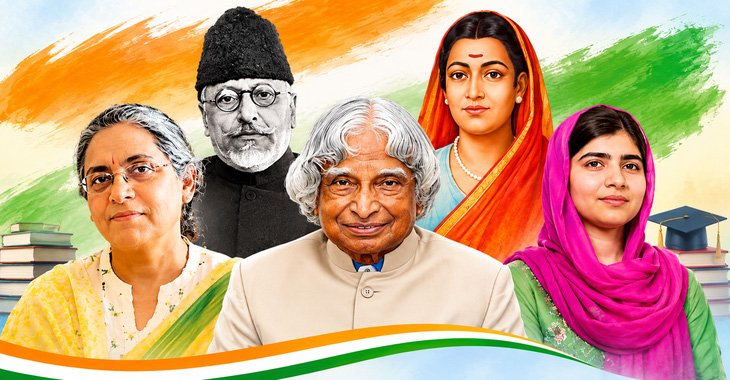

Education is much more than reading books, passing examinations, or earning academic qualifications. It is the foundation upon which individuals build their futures, societies achieve progress, and nations develop their identities.
Education gives people the confidence to question, the ability to think independently, and the courage to transform their dreams into reality.
Every year, on November 11, India celebrates National Education Day to recognise the importance of education and honour the contribution of Maulana Abul Kalam Azad, the first Education Minister of independent India. His birth anniversary provides an opportunity to remember his vision of an educated, progressive, inclusive, and intellectually empowered nation.
National Education Day is not simply a ceremonial occasion. It is a reminder that quality education should be accessible to every child, regardless of their economic background, gender, religion, caste, geographical location, or social circumstances.
In a rapidly changing world driven by technology, innovation, artificial intelligence, and global competition, education has become more important than ever. Young people need more than academic knowledge. They need creativity, critical thinking, communication skills, emotional intelligence, leadership qualities, and the ability to adapt to change.
Throughout history, several extraordinary individuals have demonstrated how education can transform lives and challenge social inequalities. From India’s pioneering women educators to internationally recognised advocates for girls’ education, their journeys remind us that meaningful change begins with knowledge and determination.
On the occasion of National Education Day 2026, let us explore the inspiring journeys of five educational leaders whose contributions continue to motivate young minds and shape the future of education.
Why Is National Education Day Celebrated on November 11?
National Education Day is celebrated across India on November 11 every year to commemorate the birth anniversary of Maulana Abul Kalam Azad, born on November 11, 1888.
Maulana Azad was India’s first Education Minister, serving from 1947 to 1958. He played an important role in laying the foundations of India’s modern education system and believed that education was essential for national development, social equality, scientific progress, and democratic values.
The Government of India announced November 11 as National Education Day in September 2008. The first celebration took place on November 11, 2008.
The occasion highlights several important priorities:
- Making quality education accessible to every child.
- Encouraging girls’ education and gender equality.
- Promoting scientific thinking, research, and innovation.
- Improving literacy and foundational learning.
- Supporting teachers and educational institutions.
- Preparing young people for employment and entrepreneurship.
- Building an inclusive education system that respects diversity.
National Education Day also encourages students to recognise the importance of lifelong learning. Education does not end when someone graduates from school or university. It is a continuous process that helps people grow personally and professionally.
5 Educational Leaders Inspiring the Youth
The history of education is filled with individuals who challenged conventional thinking, fought discrimination, and created opportunities for future generations. Their contributions extend beyond classrooms and institutions.
Here are five inspiring educational leaders whose lives offer valuable lessons to today’s youth.
1. Maulana Abul Kalam Azad – The Visionary Who Built India’s Educational Foundation
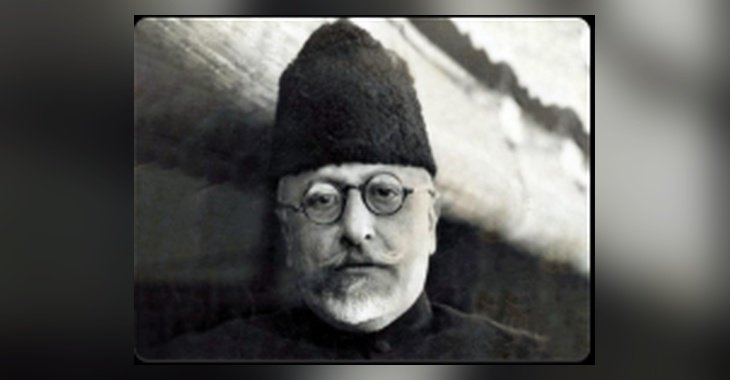
Full Name: Maulana Abul Kalam Muhiyuddin Ahmed Azad
Born: November 11, 1888
Died: February 22, 1958
Known For: India’s first Education Minister, freedom fighter, scholar, and education reformer.
Maulana Abul Kalam Azad was one of India’s most influential freedom fighters, scholars, journalists, and educationists. Born in Mecca in 1888, he grew up in a family with a strong scholarly and religious background.
From an early age, Azad demonstrated exceptional intellectual abilities. He developed an interest in literature, philosophy, history, and political thought. He became a prominent journalist and used his writing to encourage national awareness and resistance against British colonial rule.
Azad believed that education was fundamental to building a strong and independent country. He advocated for universal access to education, scientific learning, women’s education, and the development of higher educational institutions.
After India gained independence in 1947, he became the country’s first Education Minister. During his tenure, he worked towards strengthening educational infrastructure and promoting institutions responsible for technical education, higher education, cultural development, and scientific research.
He played an important role in the establishment and development of institutions such as the University Grants Commission and the Indian Institutes of Technology framework.
His vision extended beyond classroom education. He believed that education should encourage national integration, intellectual freedom, cultural understanding, and independent thinking.
A principle that captures Azad’s educational philosophy is:
“Education must be accessible to all, not reserved for a privileged few.”
This is an editorial summary of his vision rather than a verified verbatim quotation.
His life teaches young people that education is a powerful instrument for social transformation. Knowledge should not create divisions; it should bring communities together and provide equal opportunities.
Where Does He Stand Today?
Maulana Abul Kalam Azad passed away on February 22, 1958. However, his contribution to India’s education system remains deeply influential.
He was posthumously awarded the Bharat Ratna in 1992, India’s highest civilian honour. His birthday continues to be celebrated as National Education Day.
His legacy is remembered through educational institutions, scholarships, public programmes, and the continued national conversation about accessible and inclusive education.
Lesson for today’s youth: Education is not only a personal achievement. It is a responsibility to contribute to society and help build a better nation.
2. Savitribai Phule – The Pioneer Who Opened Classroom Doors for Girls
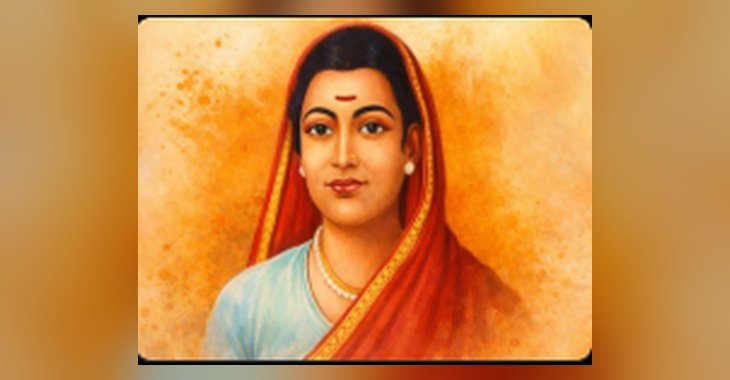
Born: January 3, 1831
Died: March 10, 1897
Known For: India’s pioneering woman teacher, social reformer, poet, and advocate of women’s education.
Savitribai Phule is remembered as one of India’s most courageous educational reformers. At a time when girls and women were denied access to formal education, she challenged deeply rooted social restrictions and worked towards making education available to everyone.
Born in Naigaon, Maharashtra, Savitribai married Jyotirao Phule at a young age. With her husband’s encouragement, she received an education and subsequently trained to become a teacher.
In 1848, Savitribai and Jyotirao Phule established a school for girls at Bhide Wada in Pune. Their initiative was revolutionary because educating girls was widely discouraged in the social environment of that period.
Savitribai became one of India’s earliest pioneering women teachers and played an important role in expanding educational opportunities for girls and marginalised communities.
Her journey was far from easy. She faced social discrimination, criticism, and hostility while travelling to teach. Nevertheless, she continued her work with extraordinary courage and determination.
She also worked for the education of oppressed communities, supported widows, challenged caste discrimination, and advocated for women’s dignity and independence.
Savitribai was also a poet and writer. Through her poetry, she encouraged people to acquire knowledge and use education to overcome social injustice.
“Go, get education.”
– Savitribai Phule
Her poem encouraged oppressed communities to pursue knowledge, challenge inequality, and break the chains of discrimination.
Where Does She Stand Today?
Savitribai Phule passed away in 1897, but her legacy remains an important part of India’s social and educational history.
She is widely remembered as a pioneer of women’s education. Educational institutions, universities, awards, and public initiatives honour her contribution to equality and social reform.
Her work continues to inspire discussions about girls’ education, gender equality, inclusive classrooms, and the importance of education for disadvantaged communities.
Lesson for today’s youth: Never allow social barriers or discrimination to determine your future. Education gives individuals the power to challenge injustice and create opportunities for others.
3. Dr. A.P.J. Abdul Kalam – The People’s President Who Inspired Millions of Students
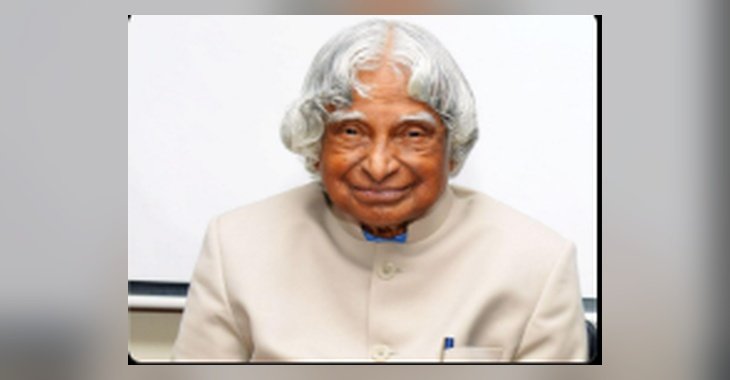
Full Name: Avul Pakir Jainulabdeen Abdul Kalam
Born: October 15, 1931
Died: July 27, 2015
Known For: Scientist, former President of India, author, teacher, and youth mentor.
Dr. A.P.J. Abdul Kalam was one of India’s most admired scientists and inspirational leaders. Popularly known as the People’s President and the Missile Man of India, he dedicated much of his life to scientific development, education, and inspiring young people.
Born in Rameswaram, Tamil Nadu, Kalam came from a modest family. His early life was shaped by discipline, hard work, curiosity, and a strong desire to learn.
Despite financial challenges, he pursued his education and specialised in aeronautical engineering. He subsequently worked with India’s space and defence research organisations, including ISRO and DRDO.
Kalam made significant contributions to India’s satellite launch vehicle programme and indigenous missile development initiatives.
In 2002, he became the 11th President of India and served until 2007. His presidency was particularly memorable because of his close relationship with students and young citizens.
Unlike leaders who limited themselves to official responsibilities, Kalam regularly visited schools, colleges, and universities. He encouraged students to ask questions, think creatively, pursue scientific research, and contribute to national development.
His books, including Wings of Fire, Ignited Minds, and India 2020, continue to motivate students and aspiring professionals.
Kalam firmly believed that young people possessed the imagination and potential required to transform India into a developed nation.
“Thinking should become your capital asset, no matter whatever ups and downs you come across in your life.”
— Dr. A.P.J. Abdul Kalam
This message highlights the importance of independent thinking, curiosity, and intellectual development.
Kalam encouraged students not to become passive recipients of information. Instead, he wanted them to question existing ideas, experiment, discover solutions, and turn knowledge into meaningful action.
Where Does He Stand Today?
Dr. Kalam passed away on July 27, 2015, while delivering a lecture at the Indian Institute of Management Shillong.
Although he is no longer physically present, his influence remains visible across India’s educational institutions and student communities.
His books are widely read, his speeches continue to inspire young audiences, and his vision of a scientifically advanced and developed India remains relevant.
He is remembered not only as a former President but also as a teacher who considered interacting with students one of the most meaningful responsibilities of his life.
Lesson for today’s youth: Dream ambitiously, work consistently, remain curious, and use your knowledge to solve real-world problems.
4. Malala Yousafzai – The Global Voice Championing Girls’ Education
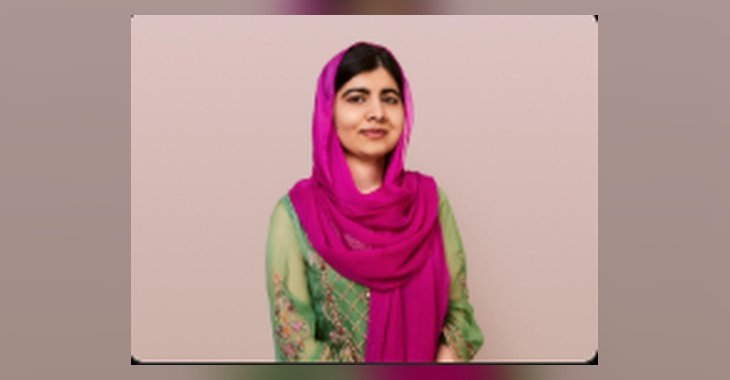
Born: July 12, 1997
Nationality: Pakistani
Known For: Education activist, Nobel Peace Prize laureate, and co-founder of Malala Fund.
Malala Yousafzai is one of the world’s most recognised advocates for girls’ education. Her remarkable journey demonstrates how one young person’s determination can inspire a global movement.
Born in Mingora, Pakistan’s Swat Valley, Malala grew up in a family that valued education. Her father, Ziauddin Yousafzai, was an education activist who encouraged her to speak openly about the importance of learning.
During her childhood, extremist restrictions in the region increasingly threatened girls’ access to education. Malala began speaking out against these restrictions and highlighting the challenges faced by girls who wanted to attend school.
In 2012, she survived an attack by a Taliban gunman while travelling home from school. Following her recovery, she continued advocating for education with even greater determination.
Her courage attracted international attention and transformed her into a powerful voice for children’s rights.
In 2014, Malala received the Nobel Peace Prize alongside Indian children’s rights activist Kailash Satyarthi. At just 17 years old, she became the youngest Nobel Peace Prize laureate.
In 2013, she and her father co-founded Malala Fund, an organisation dedicated to ensuring that every girl has access to quality secondary education.
The organisation works with local partners, supports education initiatives, and advocates for policies that remove barriers preventing girls from completing their education.
“Girls understand the power of education — and they are working to open the school gates wide enough for every child to enter.”
— Malala Yousafzai
This statement reflects her belief that girls should not simply be recipients of educational opportunities; they should also become leaders in creating change.
Where Does She Stand Today?
As of 2026, Malala continues to be associated with Malala Fund as its co-founder and a leading advocate for girls’ education.
She remains an internationally recognised education activist and Nobel Peace Prize laureate. Through advocacy, public engagement, and support for local organisations, she continues to work towards a world in which every girl can complete 12 years of quality education.
Her story is particularly relevant in societies where poverty, discrimination, conflict, and restrictive social practices prevent girls from attending school.
Lesson for today’s youth: Your age does not determine your ability to make a difference. One voice, when supported by courage and conviction, can inspire change across the world.
5. Dr. Rukmini Banerji – The Education Leader Making Learning Accessible to Every Child
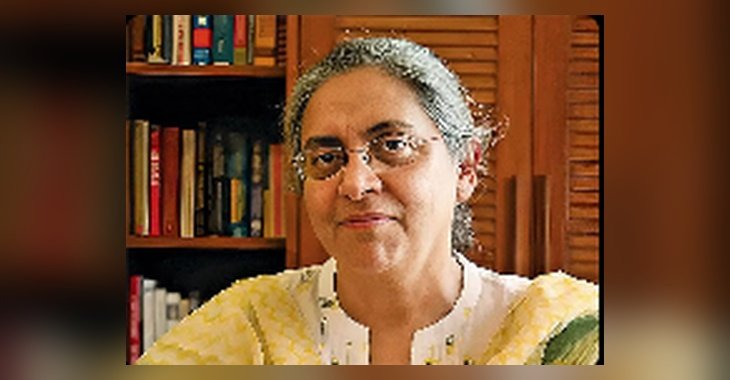
Known For: Educationist, researcher, and former CEO of Pratham Education Foundation.
Major Recognition: 2021 Yidan Prize for Education Development.
Dr. Rukmini Banerji is an influential Indian educationist whose work has focused on improving foundational learning, strengthening educational programmes, and ensuring that children acquire essential reading and mathematical skills.
Trained as an economist, she studied at St. Stephen’s College and the Delhi School of Economics before pursuing further studies at the University of Oxford as a Rhodes Scholar. She completed her PhD at the University of Chicago.
She returned to India in 1996 and joined Pratham Education Foundation, one of India’s major organisations working to improve educational opportunities for children.
Over the years, she has worked extensively with communities, schools, researchers, and government institutions to address challenges in children’s learning.
One of her significant contributions was her involvement in the Annual Status of Education Report (ASER), a nationwide initiative that assesses children’s basic reading and arithmetic abilities.
The report draws attention to an important educational challenge: attending school does not automatically guarantee that every child is learning effectively.
Banerji also helped advance the Teaching at the Right Level (TaRL) approach, which focuses on identifying children’s actual learning levels and providing instruction suited to their abilities.
This approach challenges the assumption that every child in a particular grade necessarily has the same learning needs.
Her work demonstrates that educational progress must be measured not only by school enrolment but also by meaningful learning outcomes.
“Every child in school and learning well.”
This phrase captures the vision associated with Dr. Rukmini Banerji’s educational work and the importance of combining school access with effective learning.
Where Does She Stand Today?
As of November 2026, Dr. Rukmini Banerji serves as Senior Advisor to Pratham Education Foundation. She stepped down as its CEO in 2026 after serving in the position from 2015.
She continues to be associated with educational development, research, and efforts to improve children’s foundational learning.
Her contribution is particularly important for India because basic reading and mathematical abilities are essential building blocks for further education, employment, and lifelong learning.
Lesson for today’s youth: Learning should never be reduced to marks and certificates. Understanding concepts, developing practical abilities, and helping others learn are equally important measures of educational success.
What Can Young People Learn From These Five Educational Leaders?
The five individuals discussed above come from different generations, backgrounds, and professional experiences. Yet their journeys share a common message: education becomes meaningful when it creates opportunities and improves lives.
Here are five important lessons that today’s youth can learn from their contributions.
1. Education Should Be Accessible to Everyone
Maulana Azad and Savitribai Phule demonstrated that educational opportunities should not be limited by social status, gender, or financial circumstances.
Young people should recognise that an inclusive education system benefits the entire country. Supporting the education of disadvantaged children is not merely an act of charity; it is an investment in society’s future.
2. Curiosity Is the Foundation of Innovation
Dr. A.P.J. Abdul Kalam encouraged students to think independently and explore new possibilities.
In an age of artificial intelligence, digital technology, and scientific discoveries, curiosity is one of the most valuable qualities a student can develop.
Students should learn to ask questions, conduct research, experiment, and develop solutions instead of relying entirely on memorisation.
3. Courage Can Create Social Change
Malala Yousafzai’s journey shows that young people can challenge injustice and advocate for the rights of others.
Students should understand that leadership does not always require a powerful position. It begins with taking responsibility, expressing informed opinions, and standing up for what is right.
4. Learning Matters More Than Examination Scores
Dr. Rukmini Banerji’s work highlights the importance of foundational learning.
A student may attend school regularly and still struggle with basic concepts. Therefore, education systems must focus on understanding, practical knowledge, and the individual learning needs of children.
Young people should focus on developing skills that will remain valuable throughout their lives.
5. Knowledge Should Be Used to Serve Society
All five leaders demonstrate that education should contribute to something greater than individual achievement.
Whether it involves teaching children, promoting equality, developing scientific technologies, or advocating for educational rights, knowledge becomes more powerful when it is used to improve the lives of others.
How Can Students Celebrate National Education Day 2026?
National Education Day offers schools, colleges, universities, and educational organisations an opportunity to create meaningful learning experiences.
Instead of limiting the celebration to speeches and ceremonies, institutions can organise activities that encourage students to think about the future of education.
Conclusion: Education Is the Foundation of a Better Tomorrow
National Education Day is an occasion to celebrate the power of knowledge and recognise the people who have dedicated their lives to making education more accessible and meaningful.
Maulana Abul Kalam Azad laid important foundations for India’s educational development. Savitribai Phule challenged social barriers to open educational opportunities for girls and marginalised communities. Dr. A.P.J. Abdul Kalam inspired millions of students to dream, think, and innovate. Malala Yousafzai transformed her personal struggle into a global movement for girls’ education. Dr. Rukmini Banerji has helped bring attention to the importance of foundational learning and effective educational programmes.
Their journeys are different, but their message is remarkably similar: education has the power to change individual lives and transform entire societies.
For today’s young generation, National Education Day should be more than a date on the calendar. It should be an opportunity to commit to lifelong learning, respect teachers, support educational equality, and use knowledge responsibly.
A nation’s future is not determined only by its natural resources, economic strength, or technological achievements. It is also shaped by the knowledge, values, creativity, and capabilities of its young people.
This National Education Day, let us remember that an educated generation is the strongest foundation for a progressive, inclusive, and prosperous India.