

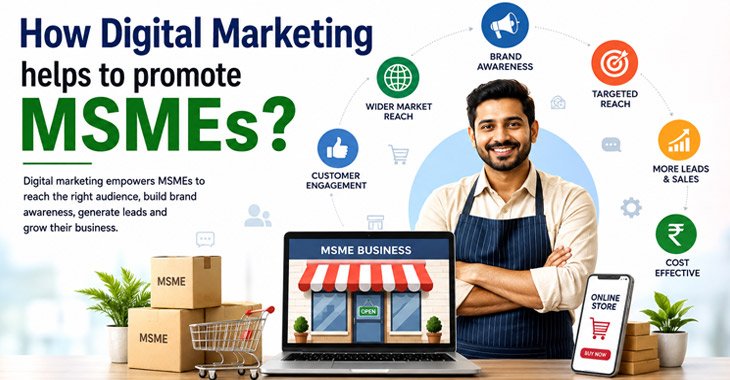

Micro, Small and Medium Enterprises (MSMEs) are among the most important contributors to economic growth, employment generation and entrepreneurship.
Across India, MSMEs operate in almost every sector, from manufacturing and textiles to food processing, retail, professional services, technology, handicrafts and logistics.
Yet, despite their economic importance, many MSMEs continue to face challenges in reaching new customers, building strong brands and competing with larger companies.
Digital marketing has emerged as a powerful solution to many of these challenges. Unlike traditional marketing, which often requires substantial investments in print advertising, television, outdoor campaigns and physical promotions, digital marketing enables MSMEs to reach highly targeted audiences through relatively affordable channels.
The growth of smartphones, affordable internet connectivity, social media platforms, search engines, digital payments and e-commerce has fundamentally changed the way customers discover and purchase products and services.
For MSMEs, this transformation creates an opportunity to move beyond geographical limitations and establish a presence in national and even international markets.
Digital marketing is no longer simply an additional promotional activity for MSMEs. It is increasingly becoming an essential component of business strategy.
Understanding Digital Marketing for MSMEs
Digital marketing refers to the promotion of products, services or brands through digital channels. These include search engines, websites, social media, email, online advertising, video platforms, messaging applications, content platforms and e-commerce marketplaces.
For an MSME, digital marketing can range from something as simple as creating a Google Business Profile and maintaining an active social media page to developing a comprehensive strategy involving search engine optimisation (SEO), paid advertising, influencer marketing, email campaigns, content marketing and marketing automation.
The biggest advantage is flexibility. An MSME does not necessarily need a large marketing department or a huge advertising budget to begin. A small business can start with a focused strategy and gradually expand its digital presence as the business grows.
1. Expanding Market Reach
One of the biggest limitations traditionally faced by MSMEs is geographical reach. A local manufacturer, retailer, consultant, food producer or service provider may have excellent products but remain largely unknown outside its immediate region.
Digital marketing can change this.
A website allows a business to present its products and services to customers around the world. Social media allows MSMEs to communicate with potential customers beyond their local markets. Search engines help people discover businesses when they are actively looking for specific products or services.
For example, a small handicraft manufacturer based in Rajasthan can use Instagram, YouTube, SEO and an e-commerce website to reach customers in Bengaluru, Mumbai, Delhi or even overseas.
This ability to overcome geographical barriers gives MSMEs a significant opportunity to expand without establishing physical outlets in every market.
2. Building Brand Awareness
Large corporations generally have substantial budgets for brand-building campaigns. MSMEs often cannot compete with them through television commercials, billboards or large-scale print campaigns.
Digital platforms offer an alternative.
Consistent digital communication can help an MSME build recognition and credibility over time. A well-designed website, professional social media presence, informative videos, customer testimonials and useful content can make a small company appear more established and trustworthy.
Brand building is particularly important for MSMEs because customers are increasingly researching businesses before making purchasing decisions.
A potential customer may search for a company online, examine its website, check reviews, look at social media posts and compare its offerings with competitors before contacting the business.
Therefore, digital visibility has become closely connected with brand credibility.
3. Cost-Effective Marketing
Budget constraints are a major consideration for MSMEs. Digital marketing can provide comparatively affordable promotional options.
Traditional advertising often involves high upfront costs. Digital campaigns, by contrast, can be started with smaller budgets and adjusted according to performance.
For example, an MSME can run a social media advertising campaign targeted at customers in a particular city, age group or interest category. If the campaign does not perform well, the business can modify the audience, creative or budget.
Search advertising can similarly target people who are already searching for relevant products or services.
This flexibility makes digital marketing particularly attractive to smaller businesses that need to closely monitor their return on marketing investment.
4. Reaching the Right Audience
Digital marketing is not simply about reaching more people. It is about reaching the right people.
Modern digital advertising platforms provide businesses with sophisticated targeting options. Depending on the platform and campaign type, MSMEs can target audiences based on location, interests, demographics, online behaviour, search intent and other factors.
Consider a small company selling premium office furniture. Instead of advertising to an entire city, it can focus campaigns on business owners, architects, interior designers, corporate decision-makers or people searching for commercial furniture.
This targeted approach can reduce wasted advertising expenditure and improve the possibility of generating qualified leads.
5. Search Engine Optimisation Creates Long-Term Visibility
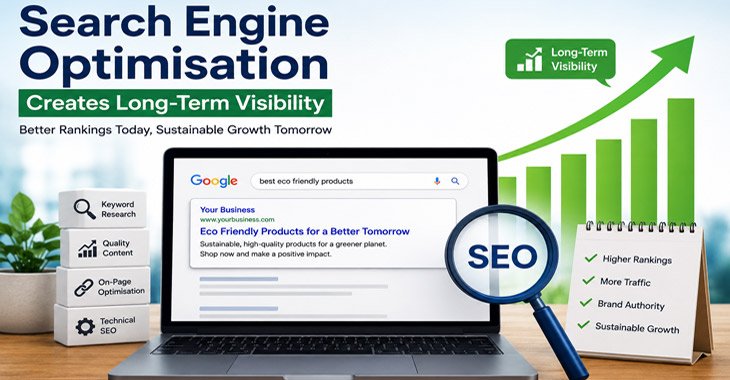
Search Engine Optimisation, commonly known as SEO, is one of the most valuable digital marketing strategies for MSMEs.
SEO helps a website improve its visibility in search engine results for relevant queries.
Suppose a customer searches for “best organic food manufacturer in Bengaluru” or “industrial packaging suppliers in Pune.” If an MSME has optimised its website and content around relevant search terms, it has a better opportunity to appear in those results.
SEO can be particularly powerful because it reaches customers who already demonstrate some level of interest or purchase intent.
A well-structured website containing product information, service pages, blogs, case studies, FAQs and customer resources can gradually generate organic traffic.
Unlike a paid advertisement that generally stops generating traffic when the campaign ends, high-quality organic content can continue attracting visitors over a longer period.
6. Social Media Helps MSMEs Connect With Customers
Social media has become one of the most accessible digital marketing channels for small businesses.
Platforms such as Instagram, Facebook, LinkedIn and YouTube enable MSMEs to showcase products, educate customers, share business stories and communicate directly with their audiences.
For consumer-focused businesses, visual content can be particularly effective. Restaurants, fashion brands, handicraft businesses, beauty companies, home décor businesses and food manufacturers can use images and short-form videos to demonstrate their products.
For B2B MSMEs, platforms such as LinkedIn can help establish professional credibility. Businesses can share industry insights, project successes, case studies, product developments and leadership perspectives.
The key is not simply to post frequently but to create content that provides value.
7. Content Marketing Builds Trust
Content marketing enables MSMEs to demonstrate their expertise rather than simply advertise their products.
A financial consultancy, for instance, could publish articles explaining tax changes, financial planning or business compliance. A manufacturing company could publish technical guides, product comparisons and case studies. A cybersecurity firm could create educational videos about common security risks.
Such content helps potential customers understand the company’s capabilities.
Over time, useful content can position an MSME as an authority within its industry.
This is especially valuable in sectors where customers require considerable information before making a purchase.
8. Video Marketing Makes Products Easier to Understand
Video has become a powerful format for digital marketing.
MSMEs can use videos to demonstrate products, explain services, introduce employees, showcase manufacturing processes, answer customer questions and publish testimonials.
A manufacturing company, for example, can create a video showing how its product is manufactured and tested. A restaurant can showcase food preparation. A professional services firm can publish short expert interviews.
Video can communicate information quickly while creating a stronger connection between the brand and its audience.
Importantly, MSMEs do not always require expensive production equipment. Smartphones, basic lighting and good content planning can be sufficient for many types of business videos.
9. Digital Marketing Supports Lead Generation
For many MSMEs, the ultimate objective of marketing is not simply visibility but business enquiries and sales.
Digital marketing can create multiple lead-generation channels.
A company website can include enquiry forms, WhatsApp buttons, phone numbers and product request forms. Search advertising can attract users actively looking for products. LinkedIn campaigns can generate B2B leads. Social media content can encourage direct messages.
Businesses can also use landing pages designed specifically for individual campaigns.
This creates a measurable path from marketing activity to customer enquiry.
10. E-Commerce Opens New Revenue Opportunities
Digital marketing and e-commerce increasingly work together.
An MSME can use digital advertising, SEO, social media and influencer marketing to drive customers toward its online store or marketplace listings.
This is particularly useful for product-based businesses.
A small apparel manufacturer, for example, can sell directly to consumers without depending entirely on distributors and physical retailers. Similarly, food brands, handicraft producers, beauty companies and home-product businesses can build online sales channels.
Digital marketing therefore does not simply promote a business—it can directly contribute to the creation of new revenue streams.
11. Customer Reviews and Online Reputation Matter
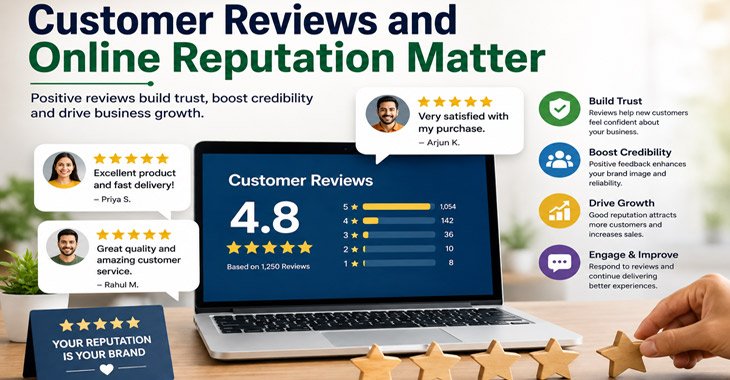
Customer reviews have become an important part of digital decision-making.
Before purchasing from an unfamiliar company, consumers frequently look for reviews and testimonials.
Positive reviews can increase trust, while unresolved negative reviews can damage a company’s reputation.
MSMEs should therefore actively manage their online reputation by encouraging satisfied customers to provide genuine reviews and responding professionally to complaints.
Transparency is important. Businesses should not attempt to manufacture fake reviews. Instead, they should focus on providing good products and services and encouraging genuine customers to share their experiences.
12. Digital Payments Make the Customer Journey Easier
The growth of digital payments has complemented digital marketing.
Customers can discover a business through an advertisement, visit its website or social media page, communicate through messaging platforms and complete a transaction digitally.
This creates a more convenient customer journey.
For MSMEs, integrating digital payment options into their sales process can reduce friction and make it easier for customers to complete purchases.
13. Email Marketing Helps Retain Customers
Digital marketing should not focus exclusively on acquiring new customers.
Customer retention is equally important.
Email marketing allows MSMEs to stay connected with existing customers. Businesses can send product updates, offers, newsletters, educational content, event invitations and personalised recommendations.
For example, a software company can inform customers about new features, while an online retailer can share product launches and seasonal promotions.
Email can also help businesses build long-term relationships rather than relying entirely on one-time purchases.
14. Data Helps MSMEs Make Better Decisions
One of the most significant differences between traditional and digital marketing is measurability.
Digital platforms provide data about impressions, clicks, website visits, engagement, leads, conversions and customer behaviour.
This information can help MSMEs understand what is working and what is not.
If a campaign receives thousands of impressions but very few enquiries, the business may need to reconsider its message or targeting. If one type of content generates significantly more engagement, the company can create more content around similar themes.
Data-driven decision-making reduces reliance on guesswork.
15. Personalisation Improves Customer Experience
Customers increasingly expect businesses to understand their needs.
Digital marketing enables MSMEs to personalise communication based on customer behaviour and preferences.
For example, an online retailer can recommend products based on previous purchases. A B2B company can send different content to existing customers and new prospects.
Personalisation can make marketing communication more relevant and improve customer engagement.
16. Digital Marketing Helps MSMEs Compete With Larger Companies
Perhaps the most important advantage is that digital marketing can reduce the visibility gap between large corporations and smaller businesses.
A multinational company may have a much larger advertising budget, but an MSME can compete through specialised knowledge, authentic storytelling, niche positioning and highly targeted marketing.
A small company that understands its customers extremely well can create content that resonates more strongly than generic corporate advertising.
Digital platforms allow businesses to compete on creativity, relevance and customer experience—not solely on advertising expenditure.
17. Influencer and Community Marketing
Influencer marketing can provide another opportunity for MSMEs, particularly consumer-facing brands.
However, businesses do not necessarily need celebrity influencers.
Micro-influencers with smaller but highly engaged audiences can sometimes provide more relevant exposure for niche businesses.
For example, a regional food brand may collaborate with food creators in a particular city. A fitness product company could work with fitness professionals who have a focused audience.
Community-based marketing can help MSMEs develop stronger relationships with specific customer groups.
18. Artificial Intelligence Is Creating New Opportunities
Artificial intelligence is increasingly becoming part of digital marketing.
MSMEs can use AI-powered tools to assist with content ideation, customer communication, data analysis, campaign optimisation, translation, basic design and marketing automation.
However, AI should complement human expertise rather than completely replace it.
Businesses still need authentic brand voices, accurate information, creative thinking and a strong understanding of their customers.
When used responsibly, AI can help small teams accomplish tasks that previously required significant time and resources.
19. Challenges MSMEs Need to Consider
Despite its advantages, digital marketing is not a shortcut to instant success.
Many MSMEs struggle with limited digital skills, inconsistent content creation, insufficient resources and difficulty measuring results.
Another challenge is that digital platforms are constantly changing. Algorithms, advertising costs, consumer behaviour and search trends can change rapidly.
Businesses also need to be careful about data privacy, cybersecurity and misleading advertising.
The solution is to develop a structured digital marketing strategy instead of randomly posting content across multiple platforms.
20. Building an Effective Digital Marketing Strategy
An MSME can begin with a simple framework:
First, define the target customer.
Understand who the business wants to reach, what problems they face and how they make purchasing decisions.
Second, establish a strong digital foundation.
Create a professional website, business listings and relevant social media profiles.
Third, develop useful content.
Create articles, videos, images, case studies, FAQs and educational resources that answer customer questions.
Fourth, focus on SEO.
Optimise website pages for relevant keywords and build useful content around customer search intent.
Fifth, experiment with paid advertising.
Start with controlled budgets and measure the results before increasing spending.
Sixth, monitor performance.
Track website traffic, enquiries, conversions, engagement and customer acquisition costs.
Finally, improve continuously.
Digital marketing should be treated as an ongoing process rather than a one-time campaign.
The Road Ahead for MSMEs
The future of MSME marketing is likely to become increasingly digital, data-driven and customer-centric.
As internet usage continues to expand and consumers become more comfortable discovering and purchasing products online, digital visibility will become increasingly important for businesses of every size.
MSMEs that invest in their digital capabilities today can potentially build stronger brands, reach new markets, generate qualified leads and create sustainable customer relationships.
The biggest opportunity is not necessarily to use every available digital platform. Instead, businesses should identify the platforms and strategies that align with their customers and objectives.
A local service provider may benefit more from local SEO and customer reviews than from spending heavily on national advertising.
A B2B manufacturer may gain more value from LinkedIn, search marketing and technical content. A consumer brand may prioritise Instagram, YouTube, influencers and e-commerce.
The strategy should therefore be driven by the business model and customer journey.
Conclusion
Digital marketing has fundamentally changed the promotional landscape for Micro, Small and Medium Enterprises. It provides MSMEs with tools to build awareness, reach wider markets, generate leads, communicate directly with customers and compete more effectively with larger organisations.
From SEO and social media to content marketing, email campaigns, video, online advertising and e-commerce, digital channels provide multiple opportunities for MSMEs to grow.
The real value of digital marketing, however, lies not merely in visibility. It lies in creating meaningful connections with customers and turning those relationships into sustainable business growth.
For MSMEs, the question is no longer whether they should embrace digital marketing. The more important question is how effectively they can use digital channels to understand their customers, communicate their value and build a competitive advantage.
In an increasingly connected economy, digital marketing can become one of the most powerful growth engines available to MSMEs—and businesses that adopt it strategically will be better positioned to compete, innovate and grow in the years ahead.