

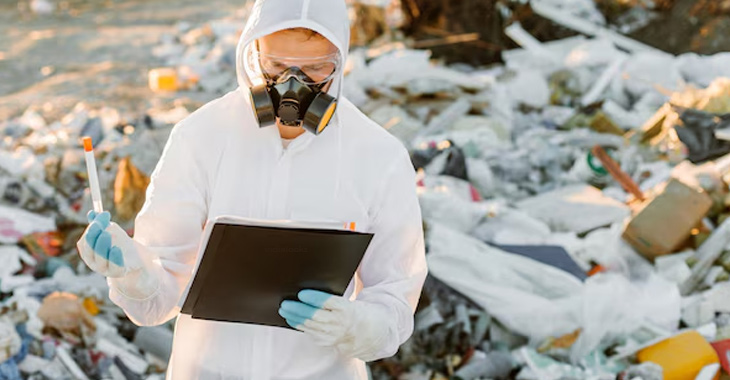

According to a report issued on Tuesday, if significant steps are not taken to alter present practices, emissions from the global plastics system—greenhouse gases, air-polluting particles, and hazardous chemicals emitted especially from plastics production processes—could double health hazards by 2040.
The study, which was published in The Lancet Planetary Health journal, found health risks at every stage of the plastics’ life cycle, from the extraction of fossil fuels, which serve as the feedstocks for over 90% of plastics, to the production of the materials and their final disposal or release into the environment.
The modeling-based study examined how several future scenarios for waste management and plastic usage might affect human health globally between 2016 and 2040.
By 2040, the detrimental effects of plastics on human health could quadruple under “business as usual,” with 40% of these effects being caused by greenhouse gas emissions and the ensuing rise in global temperatures.
The impact of hazardous chemicals released into the environment during the life cycles of plastics would account for 27% of the total, while air pollution, primarily from plastics production activities, would account for 32%.
According to the researchers, the remaining health risks (less than 1%) are related to decreased water availability, effects on the ozone layer, and elevated ionizing radiation.
“We found that emissions throughout plastics lifecycles contributed to human health burdens of global warming, air pollution, toxicity-related cancers, and non-communicable diseases, with the greatest harms from primary plastics production and open burning,” Megan Deeney, a researcher at the London School of Economics.
According to the estimate, the annual health impacts might more than double from 2.1 million healthy years of life lost in 2016 to 4.5 million healthy years of life lost in 2040 if the current system persists without any changes to policy, economics, infrastructure, materials, or consumer behavior.
According to the report, between 2016 and 2040, the global plastics system may be to blame for 83 million fewer years of healthy population life.
Additionally, the study found that enhancing the collection and recycling of plastic garbage alone would have little effect.
However, health effects associated with plastic pollution decreased along with advancements in waste collection, recycling, and material substitution or reuse.
Policymakers must better regulate and drastically cut the manufacture of new plastics for non-essential purposes in order to effectively minimize plastic emissions and their negative health effects, the researchers stated.